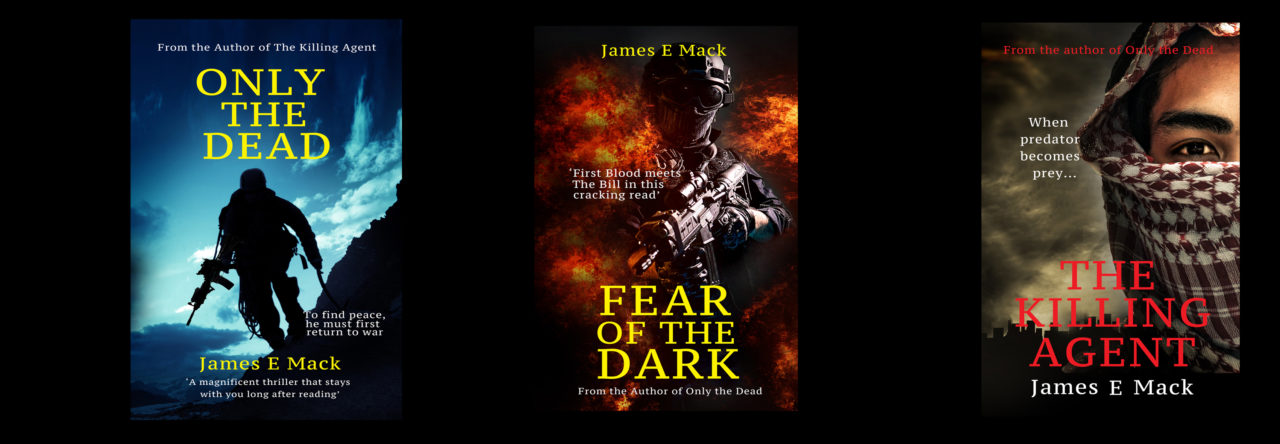
James E Mack

Author of Military Thrillers and Spy Fiction

Trump got his war

(I was a day late with my prediction)

Flames and smoke after a missile strike in central Tehran

America and Israel have begun their military operation against Iran. In my article War in a week?, I was confident that the US would strike Iran within a week of posting.

I was a day off.

As I write this response, it seems there is a division of labour carved up between the USA and Israel where the Israelis are targeting and killing Iranian leadership personalities while the US goes after military targets and supporting infrastructure. The Iranian regime has confirmed that their ‘supreme leader’, the Ayatollah Khameini, was killed during one of the first strikes.

Iran’s response has been to fire off missile salvos and drone attacks to what it considers legitimate targets. Israel, obviously. But also regional countries it views as supporting American interests. Bahrain, Kuwait, Saudi Arabia, the UAE, Iraq, Jordan. Unconfirmed reports of two missiles intercepted as they approached Cyprus then a Shahed drone hitting Akrotiri Air Base. The bulk of these attacks were intercepted and neutralised but some still made it through although casualties and deaths are minimal. This response and the targets would have been anticipated during the wargaming of this operation. Air defences would have been beefed up and augmented in readiness. An oil tanker was struck off the coast and is currently on fire and, probably the most impactful element on the West so far, The Strait of Hormuz is closed.

Why will this closure impact not just the West, but the rest of the world?

Over 30% of the world’s seaborne crude oil transits this waterway. A third of the world’s most essential energy product relies on this small stretch of water to transport the crude across the globe. And around 20% of global Liquefied Natural Gas (LNG) also moves through this narrow strait. So what happens when it closes?

2025 graphic highlighting data. Credit: Getty Images

Tankers have to turn around, get the hell out of the area. Insurers such as Lloyds of London refuse to cover any craft moving through the area against the risk of destruction or confiscation. Oil and LNG prices spike, first as a knee jerk then, if the situation doesn’t calm down quickly, climb at an astronomical rate. Which affects, well, pretty much everybody. Today, Iran began dedicated targeting of energy sites in the oil producing countries. Already, the world’s largest LNG producer, Qatar Energy, halted production after Iranian attacks, followed closely by Saudi Arabia’s biggest oil refinery.

As of this morning, Day 3 of the war, oil prices already spiked 10% and natural gas in Europe spiked an eye-watering 50%.

Consider Russia’s invasion of Ukraine in 2022. UK energy costs for consumers became 30% higher almost overnight. That’s a lot more money to find at the end of every month. And that’s when only 2 countries affected the global market. This latest crisis literally pulls in the world’s major oil and gas producers and exporters who rely on political and economic stability to guarantee access to markets and unrestricted travel routes. With the war on Iran now in full swing, they have neither.

The Americans could alleviate some of these issues by providing safe escort for vessels, keeping The Strait open and the ships safe from attack or sabotage. But that means consigning American troops and hardware to a long term operation, exposing them as targets to whatever is left of the Iranian regime. I personally don’t think Donald Trump or his Party want this. He wants a clean decapitation of the regime, no more threats of nuclear weapons, and his troops to return to the US.

Which would be nice.

Unfortunately, this is a region where asymmetric warfare abounds and even the might of the US military can run into real problems. Look at the Houthi rebels operating out of Yemen. By summer 2025 this group of 20,000 fighters had destroyed at least 7 American Reaper drones, which cost around $30 million apiece. And although it’s being kept on the QT at the moment, the Americans lost a more advanced drone near Iran only two weeks ago. Lost as in they have no idea what happened to it. Not crashed or shot down, but lost. And this morning we know there have been at least 4 American service personnel killed and 3 fighter jets shot down by friendly fire in Kuwait.

F-15 Fighter Jet crashing in Kuwait

Shia muslims around the world have been protesting the killing of the Ayatollah. In Nigeria, the protests were decidedly anti-American with US and Israeli flags being burned or dragged along the ground. One of Iran’s main proxy forces, Hezbollah, has been trading blows with Israel in Lebanon with dozens killed and thousands fleeing. Shia militias in Iraq are targeting anything remotely connected to American interests. 10 dead pro-Iran protestors were killed at the US Consulate in Pakistan.

American Consulate, Karachi. Credit: AP

So the conflict has not been contained to the Iranian hinterland, but this is something that every Middle Eastern country warned America would happen. Almost 10 countries have now been dragged into the conflict, escalating it to a truly regional war. Qatar has had to send up fighter jets to shoot down Iranian drones as their Air Defences were not sufficiently capable. So we now have a third country’s jets in the sky and probably more to follow. And let’s face it, a lot of these countries might just be pissed off enough to look at America’s hammering of Iran to think ‘You know what? Might be nice to jump on the pile-on while it’s available.’ It’s a very short operational leap from flying defence to assisting in offensive sorties over Iran.

One of the main problems in assessing likely outcomes in this war is that there is no clearly defined goal or endgame. Trump shoe-shuffles between no nukes and regime change depending on what day of the week he’s on camera. The Pentagon had to go on record today admitting that there was no intelligence indicating Iran was a direct threat to the USA.

The killing of Khameini will have limited impact as he was elderly and in ill health so already had a succession plan in place. I know America is hoping for the Iranian population to rise up against the government and push for a regime change more aligned to Western interests and values. Unfortunately, recent history shows us that this never succeeds. Gadafi killed, Libya descends into violent chaos. Saddam Hussein killed, Iraq descends into violent chaos. Taliban leadership defeated, Afghanistan descends into violent chaos. Israel has decades-long history of assassinating Hamas and Hezbollah leaders yet those organisations continued to wage terror with malign effectiveness.

America and its allies are also concerned about Iranian sleeper cells after a very open threat from the Iranian regime as the build up to the war was occurring. Contrary to public belief, Iranian intelligence officers don’t enter the US via the southern border. Particularly in this past year where immediate deportation is pretty much the standard. Iran’s Quds Force use high quality, forged passports and individuals from third party nations to infiltrate target countries through legitimate channels. They also recruit and fund local criminals to carry out activities on their behalf.

Cover of my novel ‘Asset Seven’

In my novel Asset Seven, one of the sub plots revolves around a Quds Force operation to get a dirty bomb detonated on American soil. The methods and tactics described in the story were drawn from real world events and close calls and my knowledge of Quds Force and their capabilities. The use of proximity countries for support and spring boarding of operations, and the exploitation of established criminal networks are all tried and trusted methods the Quds Force employs during its foreign operations. I don’t think it’s a stretch to imagine that the Iranian regime has already planned and prepared groups for internal attacks against America as well as its overseas interests.

Donald Trump has put a timeframe of a month on this war. And I think his, and his party’s political future really hang in the balance here. This is the first time America has gone to war when the public opposed it. Vietnam, Iraq, Afghanistan etc all had public support for the initial interventions. Iran does not. Trump also campaigned on a ticket of ‘No more foreign wars’, something his MAGA base felt strongly about and are angry with his about-turn. In two months he’s attacked two countries. Venezuela was explained away as, well, not really a war so it doesn’t count. Iran, however, is the very definition of a foreign war. The Pentagon and The White House are claiming that what the President actually meant when he was campaigning was ‘no more dumb foreign wars’. I guess the term ‘dumb’ is being left open for interpretation . . .

Difficult to predict what’s going to happen with any certainty. America and Israel will win, but what that win will look like is anybody’s guess. The longer the conflict drags on, the more likelihood there is of Trump accepting even a small agreement from Iran that he can frame as victory and pull his armed forces out of the region. He will do this to protect his political future and won’t give a damn whether it suits Israel or not or whether Iran is as degraded as he demanded or not. In this case, Israel could well be left to face a wounded, raging Iran on its own. Iran’s national security chief Ali Larijani has already warned that his country has “prepared itself for a long war”.

Be prepared for a very fast media cycle on this one as events continue to unfold. America is actually sending more troops and assets to the region so that alone tells you they want this wrapped up fast.

The cornered Bear

How the war in Ukraine just turned really bad for Russia

It should have taken 3 days.

3 days for the self-proclaimed strongest military in the world to roll into a country it had already invaded and occupied areas within only 8 years before. The armoured vehicles even carrying victory paraphernalia such as flags and banners ready to display in the captured nation’s capital, Kyiv.

Except it didn’t work out that way.

It’s the 4-year ‘anniversary’ of the second Russian invasion of Ukraine. 4 years. That’s 4 years of constant war and attrition, particularly on the civilian population of Ukraine. When Russia began to realise that it was not going to win militarily, the targeting of energy infrastructure and civilian population zones began. An attempt to degrade Ukraine’s living conditions and force their government to concede defeat.

Except it didn’t work out that way.

The Ukrainians were far more resilient than most, even in the West, gave them credit for. Not only that, but they began to fight fire with fire, striking Russian refineries and gas installations deep inside Russia. This caused instant economic hurt for Russia which, as a petrostate reliant on exports of its petrochemicals, it cannot endure for even the shortest period of time. With 2026 planned and budgeted on an anticipated price for Russian oil that has now dropped, The Kremlin knows it is in deep trouble. It has already raided the social security budget to help offset the cost of the war but that’s a one trick pony; the money has gone and not been replaced. For the first time in recent history, both banks and business leaders in Russia are starting to speak openly about a financial catastrophe that is already underway. When you consider that openly criticising the government usually leads to a short trip out of a ten storey window, things must be very serious for these people to risk their statements.

The Kremlin has also ceased bonus payments to its soldiers fighting in Ukraine. The one incentive which motivated young men from rural provinces to volunteer for the chance of a small sum of money with which to help their families. Worse than that however, and a more telling sign of the economic pain it is suffering, Russia has also stopped the death benefit paid to families and partners of the soldiers who died fighting in Ukraine.

Russian women demanding the return of their sons from fighting in Ukraine. Getty Images

The impact of this was immediate and a public relations headache for the government. Widows and mothers posting on social media about the government’s betrayal. Public marches covered by independent bloggers and state media highlighting the scale of the problem. The Kremlin responded by issuing a directive to military commanders that families were no longer to be notified, that bodies could be left in situ rather than being recovered for burial. That mass casualty events should be cleaned up before they could be filmed and the dead Russian soldiers buried in a mass grave.

CSIS, the Center for Strategic and International Studies, assesses Russian battlefield casualties in Ukraine to be around 1.2 million. This also has a massive impact on The Kremlin’s war machine. The meat grinder of Ukraine requires constant feeding and Russia is running out of soldiers with fewer mobilisations occurring and fewer troops available. To counter this, they have come up with some rather . . . creative solutions.

Indian press-ganged men in Ukraine

Last year, a large group of men from India departed for Belarus after responding to a recruitment advert seeking individuals interested in becoming plumbers, electricians, and engineers. The recruitment company in Delhi arranged all the visas, paperwork, and transport for the hundreds of men who replied to the advertisements on social media. Some of the men found it odd that, on reaching the stopover in Russia, their passports and mobile phones were taken but accepted the ‘security protocol’ explanation given by their Russian hosts. That explanation was soon exposed as the lie it was when the men were driven to a military installation, processed into the army, beaten and abused, given a short training course and told they were being sent to fight in Ukraine. And if they refused or tried to run away, they would be shot by their officers as deserters.

The men’s experiences of the front line paint a brutal picture of an army already in decline and snowballing downhill really fast. Command and control enforced by threat of execution. Troops forced at gunpoint to run at heavily defended Ukrainian positions. Constantly hunted and killed by drones. Commanders selling postings to the rear for money. Medical documents which ensured a departure from the war sold for cash by officers. Suicides, mental breakdowns, rife use of narcotics, torture. Several of the Indian returnees broke down when talking about their fellow men being raped by Russian soldiers at the front.

But their experiences, incredibly, are in no way unique.

African civilians fighting for Russia in Ukraine.

Russia’s presence in African countries has provided it with access to large populations of disaffected individuals on the very lowest rung of the socioeconomic ladder. Young men easily duped into scams similar to that of the Indian men. A chance at a better future, qualifications, prospects, money to help your family. Young African men from over 30 different countries duped or scammed into fighting for Russia in a war they know nothing about. The stories which the survivors tell echo and support those which the Indian men relayed. The Africans tell of endemic racism, being openly referred to and deployed as cannon fodder, forced to charge the Ukrainian lines and exhaust the troops before Russian soldiers attacked. Kenyans, Ugandans, South Africans, dying in their hundreds in tactics more reminiscent of the First World War than a modern day conflict.

Captured North Korean soldiers in Ukraine

President Putin of Russia also sealed a deal whereby Russia supplied North Korea with military technical assistance in return for thousands of ground troops to deploy against Ukraine. These foreign fighters too, talked of confusion, brutality, broken logistic chains, lack of resupply.

Cuban recruits with Russian military. Credit – Herrera family

And to add to the international flavour of Russia’s ‘special military operation’, let’s not forget the thousands of Cubans fighting on the front lines. Again, mostly poor young men escaping poverty by answering employment adverts, another pipeline of cannon fodder for The Kremlin to throw at Ukrainian defences. In an interesting development, Cuba’s Foreign Minister confirmed that Russia will be sending oil and other petroleum products to the island nation in the guise of ‘humanitarian aid’. As Cuba imported around 60% of its oil from Venezuela, it has almost run dry since the USA attacked Venezuela and cut off the supply to Cuba. I don’t think there’s much doubt that in return for his magnanimous gesture, Putin will request a formal agreement for troops to be provided to assist Russia.

Ukrainian soldier with Starlink apparatus. Credit – Reuters

So far, I’ve mentioned the Russian economy and the struggle for manpower as being 2 key factors in why the pressure is ramping up fast. But there’s a third, very recent development that is accelerating the pressure in real time. Starlink, the mobile internet developed by Elon Musk, has been the main platform for Russian communications and command, including drone coordination and deployment. When Ukraine and Europe rightly asked why a businessman with US government contracts was profiting from large scale attacks against civilians, Musk was shamed into shutting down the illicit terminals being used by the Russian military. While Both Ukraine and Russia’s military have been using and relying heavily on the platform, Ukraine has officially registered Starlink terminals whereas Russia has sourced theirs through third-party providers to evade sanctions.

The impact was instant.

All Russian battlefield communications were affected. As one Russian officer explained ‘ . . . it was as though someone had turned off a switch across our whole military.’ So, if things were fraught and confusing before, they just got a whole lot worse. But not to worry, the soldiers could always return to their use of Telegram, the messaging App beloved and utilised for both personal and official use.

Except they couldn’t.

The Kremlin, in an attempt to silence the bad news coming from the Ukraine frontlines and the affected families at home, had shut down the App without warning. So now the Russian military fighting in Ukraine are literally resorting to speaking over captured radios which of course, are intercepted and used as targeting lock-ons for Ukrainian drone, jet, and artillery strikes. Russians have been shelling each other’s positions as confusion and panic abound. Resupply and logistic support has all but ceased due to Ukrainian attacks. Ukraine has recaptured over 400 Square kilometres in under two weeks, its biggest gain in two and a half years.

The problem for Russia is that they have no replacement for Starlink. No redundancy was built in as a failsafe or even a backup. So, for the time being at least, they are like a boxer in the ring whose eyes have been swollen shut, waiting to take the blows before they can lash out wildly in the direction they think they came.

So, massive economic pressures that are starting to become public knowledge. Returning soldiers and their families telling the hard truths all over social media. Troop shortages that are being plugged by scams and press-gang tactics to pull in conscripts from abroad. Operational communications blackout showing immediate effect and losses for Russia. There’s very few administrations on the planet that could hold it together with all these factors smashing them at once, let alone a dictatorship ruled by one ageing individual.

And, not that you need it after reading this, but if you wanted any further confirmation that Russia is seriously on the back foot after these recent developments, have a look at this.

Air Defence positions covering Putin’s Valdai residence

The green marker is Vladimir Putin’s lakeside Valdai residence. The red markers are Air Defence (AD) positions sited to cover and protect the residence from Ukrainian drone, missile, or jet attacks. The yellow marker is the S-400 Triumf, Russia’s advanced mobile long-range surface-to-air missile (SAM) system, designed to detect and destroy aircraft, drones, and missiles up to 400 km away. In 2023/2024 there were only 2 AD systems in this area. So, a massive increase to say the least.

And the more worrying aspect of this for Russia?

Ukraine’s Flamingo missiles, in the last week, have struck Russian military targets as far as 1400km inside Russia. Defeating Russian air defences. So, Putin may believe he has a ring of steel around his lakeside residence, but these recent strikes show that Ukrainian missiles are capable of beating those air defence systems.

What’s also noticeable is Russia’s latest stance on the ‘peace’ talks in Geneva involving Russia, the USA, and Ukraine. Demands of totality. No grey areas. Different personalities now representing the Kremlin at the talks. Putin cannot walk away from Ukraine without anything resembling a win. To do so seals his own political and, as this is Russia we’re talking about, probably physical, fate. His country is broke, his people disaffected, the oligarchs he previously controlled now plot against him because they are losing money. The deal Putin struck with the oligarchs was always one where as long as they pledged allegiance to him, he would allow them to make money in whatever manner they wanted.

But they’re no longer making that kind of money.

The deal no longer works for them and they’re starting to look at what might come next. Or rather, who might come next. Because they need that person to be one of them, or at least, one who looks after them.

Many people who read my articles and books regularly ask why the current American administration supports Russia so much. A country representing an ideology that Americans have sent their sons and daughters to fight against since the end of World War 2. Even given Trump’s transactional nature, they can’t understand why the USA suddenly switched it’s support to a country with an economy the size of Italy’s. Russia has openly promised the USA riches of 12 Trillion Dollars. As that’s 6 times the size of Russia’s entire economy, I’m smelling a slight exaggeration here. And its the usual trifecta of access to giant oil deposits, rare earth minerals in the arctic, and access to 145 million consumers.

Except . . .

The oil deposits are old and pretty depleted, the minerals are not definitive in terms of quantity, quality or even viability to be accessed, and as for 145 million consumers? The vast majority of Russians are poor. Really poor. So, expensive American exports are not something with which to build a future economic prediction upon. For America as a nation, I don’t see much upside. For Russia, however, any foreign investment and trade will be welcomed with open arms.

But . . .

Even amongst Republicans in Congress and The Senate, there are some serious dissenters over President Trump’s determination for Russia to succeed in its war on Ukraine. Formerly quiet voices are now openly questioning why their Administration is giving clear support to Russia while practically ordering Ukraine to surrender and accede to all Russian demands. As Trump’s physical and political health declines, these voices are growing in number and volume. So, any trade agreements or deals struck in the near future might become null and void a lot sooner than Russia would like.

With Russia being the authoritarian state that it is, no independent media reporting of note exists. The state running the media as a propaganda arm of the government. So it is rare when political dissent from state representatives is covered in any depth or even reported at all. In December, Grigory Yeremeev, a politician from the Volga region of Russia, delivered a speech in Parliament where he demanded an end to the war in Ukraine and openly stated that it was a direct failure for Putin and his regime. Despite being screamed and shouted at by Putin’s acolytes and arse kissers, he concluded his speech laying the failure of the war and the destruction of the Russian economy at the feet of Vladimir Putin. This week, Yeremeev was charged with the standard ‘discrediting the Army’ for his temerity in daring to make public the true state of Russia as a result of the invasion of Ukraine.

In another crackdown on free speech and communications, the Kremlin has also shut down WhatsApp as people were turning to this as an alternative to Telegram which had been shut down earlier. Informed sources, however, believe that the WhatsApp denial is aimed at curbing gatherings and protests that have been steadily growing over the past few months.

Russian National Guard – Rosvgardia

A recent action which supports this theory is the sweeping powers that Putin has granted the Russian National Guard, The Rosvgardia. Formerly a state security force which responded to internal threats to the regime, Rosvgardia is now a major paramilitary force in its own right. It now has its own organic heavy weapons, armoured tanks and vehicles, special forces, intelligence, and immediate combat readiness and is deployed at the order and direction of the president. Putin’s own private army more or less. This month, Rosvgardia was given another set of sweeping powers with which to ‘protect the nation’. Powers that resemble the regime cracking down hard on anything that even smells like dissent against the state narrative. Another sign that all is not well from behind the rusting sheets of what’s left of the Iron Curtain.

Short of tactical nuclear weapons, Putin has thrown everything he has at Ukraine and continues to fail. He has bankrupted his country, repressed its citizens and their free speech, and convinced the US President to back him in winning his war. The only problem with that is he is doing the opposite of winning. Putin is losing. Regularly.

As the title of this article alludes to, the Russian Bear is cornered at the moment. Pressure from three different elements combining to stress test Putin’s command and control. And a cornered Bear is the most dangerous. With nothing to lose, there’s no telling what the world’s foremost dictator will do to hold on to power and continue with his quest to recreate the USSR.

War in a week?

The biggest military deployment since 2003 is happening now

War in a week?

That’s not conjecture or hyperbole. As of today, it’s a very real possibility. Since the bombing of Iranian targets last year, the USA has been engaging with Iran on a two-pronged front. Diplomatic negotiations between White House representatives and those from the Iranian regime, and a steady build up of force in the region to display physical consequences if agreements are not reached.

I, like many others, assumed the situation had reached an impasse when Donald Trump stated that because the Iranians didn’t concede to his demands he was imposing tariffs. That’s right, tariffs. A meaningless measure against a country hardened and accustomed to enduring and evading international sanctions. Trump had obviously become bored with the political stalemate and wanted to move on, bigger fish to fry and all that.

But Israel wasn’t happy.

Benjamin Netanyahu flew to Washington at very short notice bringing with him not the diplomats and negotiators one would expect on such a visit but his hawks. The key military figures who are keying up Israel’s next strike against Iran. A strike that needed simultaneous US action to maximise its effectiveness. Trump bored and moving on from the Iran issue was not something Netanyahu wanted to see. After this meeting, the build up of American military troops and hardware to the region intensified in a big way.

But is it all just a bluff? Sabre-rattling to convince Iran that the US will wield the stick if the carrot fails?

No. Unfortunately, it’s not.

These are the movements of in-flight refuelling tankers from 2 days ago. You don’t send these aircraft as part of a bluff. There’s no point to it. They’re the logistics chain. You send them when you know you’re going to have thirsty aircraft needing to refuel after bombing or attack runs. These are among the last types of aircraft that the USA has been quietly stacking around bases in the Middle East.

Here’s some who got there before:

American attack aircraft, Jordan (Planet Labs)
American Electronic Warfare aircraft, Jordan. (Planet Labs)
Recently arrived MQ9-Reaper Drones, Jordan. (Planet Labs)
Two P-8 Poseidon surveillance planes, two MC-130J special forces planes and three KC-135 Stratotankers, Diego Garcia. (Planet Labs)

Another pointer that strengthens the conclusion of physical confrontation? The deployment of Combat Search And Rescue (CSAR) personnel and aircraft. Again, you don’t send these assets to a contested region unless you’re anticipating the possibility of downed pilots.

U.S. Air Force CSAR HC-130J Combat King II. (Credit – U.S. Air Force)

The aircraft above is a HC-130J Combat King II, a specialized beast which supports CSAR missions in hostile environments. It is equipped for long-range operations, night missions, and aerial refueling of rescue helicopters. The aircraft can refuel two HH-60G Pave Hawk helicopters simultaneously, allowing rescue crews to operate deep inside contested airspace. Two of these aircraft and their crews were recently deployed from their home base in Florida to undisclosed bases in the Middle East.

These aircraft are typically deployed in advance of or during air combat operations to ensure the recovery of downed aircrews. They facilitate U.S. commanders maintaining personnel recovery capability during high-risk air operations, including those involving strikes or sustained air activity over hostile territory. Again, not any point in deploying as part of a sabre-rattling exercise but essential for combat operations.

Interestingly, many of the USA’s allies in the region have refused permission for America to transit their airspace for any confrontation with Iran. Citing fear of imminent reprisal from the regime, this has pushed the US into deploying a massive naval contingent including the aircraft carrier the USS Gerald R. Ford, the world’s largest warship ever built. The Ford has been at sea since June 2025 and the Commander of the US Fleet, Admiral Daryl Caudle, pushed back against extending the crew’s deployment even further. To give this some context, if, as the crew has been informed, this extension of their deployment is scheduled until April 2026, it will break post-Vietnam War records for operational duration. But the Admiral’s pushback was ignored and the USS Gerald R. Ford is on track to reach the coast of Israel either today or tomorrow. Once again, unnecessary to keep these poor sailors away from their families for another extended period if all you were doing was sabre-rattling. However, when your Middle Eastern allies close off their airspace for your combat operations, you need to source and use your own launch platforms.

Will the USA definitely strike Iran? Latest statements from the White House claim that the world will know in 10 day’s time. That seems to me to be well beyond the threshold for keeping pre-positioned troops and assets safe. The Iranians have already deployed a Shahed drone against a US ship which shot it down when it got too close. These carrier groups and major military assets forward deployed represent targets for as long as they are in the region. Leaving them in situ for a further 10 days seems irrational and unwise. But then again, another 10 days gives the President of the USA some time to come up with the reason he’s committed the biggest military expedition since 2003 to the region. To date, he hasn’t actually stated the justification for this intervention and in fact, as major news outlets have noted, hasn’t bothered involving Congress or even any public debate or consultation. His critics point out that having to strike Iran again so soon after his last foray only proves that the previous bombings had little to no effect, despite Trump’s claims of garlanded glory.

And the Iranian regime? They’re actually talking a hard game with mentions of Red Lines and unacceptable American demands. Warning that the US could still be dealt a heavy blow despite the size and strength of their military contingent. In private, a law firm in France has seen over a thousand percent increase in visa applications from wealthy Iranians. Russia has confirmed it will take fleeing heads of the Iranian regime and provide them sanctuary in Moscow. Russia has also, in the past week, delivered weapons technology in exchange for gold in a further quid pro quo for Iran’s supply of missiles and drones for Putin’s war against Ukraine. Yesterday Russia also conducted joint naval exercises with Iran near the Straits of Hormuz. While a lot of journalists pointed to this as Russia warning the US not to strike Iran, the Russian element was minimal in number and effect and more just a show of solidarity with Iran.

China is also displeased at what it perceives as unchecked US aggression against one of China’s main suppliers of discounted oil. Importing 1.4 million barrels per day, this is a significant supply chain for Chinese energy. China supplies Iran with missile and air defence technology components that it can’t get anywhere else due to sanctions. I’ve seen reports of a marked increase in Chinese military freight planes landing in Iran since the beginning of February but no further details on what they could have been carrying. Despite this symbiotic relationship, China won’t openly support a direct confrontation with the US but will happily stoke the fires from the background.

The scale and complement of this deployment already shows that this confrontation will be very different to the surgical strikes the USA implemented last year. This is a deployment that is anticipating weeks of operations, not just a day. And you know, maybe, just maybe, it is a bluff but if that’s the case, it’s a very bold call. Very bold. To expose an enormous task force to potential attack in the name of a diplomatic deal? As I said earlier, I’d buy that if it wasn’t for the logistic and rescue support elements deployed alongside the tip of the spear.

So, the biggest military build-up since Iraq in 2003 is happening now and we don’t know whether it’s war or sabre-rattling of the most dangerous kind. We’re told we’ll find out in 10 days.

My gut tells me we will find out, one way or another, a lot sooner than that.

BANNER BETRAYED

How the UK Government betrayed its Northern Ireland Veterans

Army Officer, Northern Ireland. Credit – MoD

When the Conservative government pushed through a bill titled The Northern Ireland Troubles (Legacy & Reconciliation) Act 2023, it seemed like a final end to the persecution and prosecution of Northern Ireland Veterans. The Veterans of Operation Banner, the overarching term for the deployment of British troops over the almost 40 year conflict. Perhaps, former soldiers now in their 60s, 70s, and 80s could finally be at peace knowing that they would no longer be dragged into the media spotlight and taken to court for alleged wrongdoings going back over 50 years. Alleged wrongdoings which had been investigated at the time and the individuals in question cleared. Alleged wrongdoings in which NO new evidence has been discovered or disclosed but yet these British Veterans were still compelled by the UK government to submit to these show trials.

Imagine in 1975, a 50 year old Veteran of The Black Watch (or any regional regiment) standing trial for using questionable force against a platoon of German soldiers in the Reichswald Forest in 1945. No evidence submitted to support the spurious claim but the former soldier nonetheless is taken to a court in Germany to face the prosecution and provide testimony to refute the allegations. German media portray him as a criminal who has escaped justice for over 30 years while the families of the German dead portray their sons as mere defenders of their homes and families. German politicians bluster before the cameras, painting the narrative that Britain let loose an army of murderers and psychopaths who killed and wounded at will.

Except, of course, such a fanciful incident never came to pass. Well, not until the Northern Ireland conflict.

Even before Labour ascended to power in the UK, they’d made it clear that they intended repealing the immunity against prosecution which Veterans now had under the Conservative’s bill. Think about that for a moment; they made this aim clear before they came into power. That alone, I believe demonstrates the party’s strength of feeling on the subject and their disregard and contempt for the soldiers who served their country under the governments that had gone before. And that brings me nicely to my next point.

Why is it always the poor rank and file of the military that are hounded by these vexatious claims? Where the hell are the former Prime Ministers, Defence Ministers, Chiefs of Defence Staffs, Generals, Colonels, being brought before these kangaroo courts? You know, the architects and directors of the military deployments to Northern Ireland. Those responsible for sending a fighting force to quell a civil disturbance and keep the peace. A role that the British military was wholly inadequate of performing, particularly in the early days of The Troubles.

These governments took thousands of young soldiers, many poorly educated and from the lower socio-economic tiers of British society. Young men with limited prospects but for whom the military offered a structured career path. But these young men were trained for combat, fighting, killing. And suddenly they found themselves dumped into the streets of Belfast and Londonderry. Streets that for a lot of them, were not too dissimilar from the poverty stricken areas of their own home towns. A few weeks training provided in ‘riot control’, ‘civil disturbance’, ‘searching of people and property’ was deemed enough to cater for the transition from war fighting to keeping the peace.

Unfortunately, our adversaries were anything but peaceful.

Female IRA member with AR18 in Belfast. Credit – Colman Doyle

The dissonance of walking streets that looked not unlike your own home town but that illusion shattered with the crack of 7.62mm gunshots reverberating around a quiet cut de sac. The gun fired by a woman covering an IRA team caught planting an explosive device. A woman who looked just like the girls you chatted up in your local bars and nightclubs, Dressed like she could be off for a drink with her friends before hitting the dance floor. That image unreconcilable with the heavy rifle almost as long as she is tall. The soldier pauses, initially morally confused at the prospect of opening fire against the girl, then unsure whether or not there is a rule against shooting at women. By the time his adrenalin abates and his decision making faculties return, the woman is gone.

This is not a fight that these soldiers were properly trained or equipped to succeed in. Centuries of sectarian divide and antipathy now concentrated on urban and rural focus points and a prominent target: The British Military. Easy to identify, easy to find, and, initially at least, easy to kill. As the violence and danger escalates, British troops find themselves having to make split second decisions on complex situations. Rules of Engagement, ROEs, become a crucial element to the soldiers’ operations. Guidelines become directives, become formal rules printed on cards for immediate personal access. To sum it up though, the infamous Yellow Card issued to soldiers really still left the final decision to shoot or not with the individual. An individual trained to meet conflict with aggression and violence of action, to neutralise the threat in order to save the lives of he and his fellow soldiers. Years of training in section and troop/platoon attacks, fire and manoeuvre, marksmanship principles. Skills hardwired into the DNA of the infantry soldier. But now expected to switch all that muscle memory off and adapt to an entirely different set of parameters.

City Patrol, 1990s

As time went on, training and preparation for troops deploying to Northern Ireland improved as lessons were fed back from the operational environment. But soldiers’ and Marines’ raison d’être was war fighting, not the complex counterinsurgency they were still being rotated through for 6 month tours. The mission specific training for Northern Ireland was much better in preparing troops for the environment in which they would be operating but the reality on the ground was still surprising to most. Particularly as the enemy had also been adapting as the years passed.

The IRA knew and exploited the military’s ROEs. A gunman opens fire on an Army foot patrol, sprints down an alley and passes the weapon to a waiting teenager who will get the gun away from the immediate area. The gunman well aware the soldiers couldn’t open fire on an unarmed man, his only concern getting to the safe house where a bath and a change of clothing was waiting. Wouldn’t matter that the gunman may have killed or seriously wounded the soldiers he fired upon, he knows the soldiers can’t shoot him if he isn’t carrying a weapon.

For the members of the patrol, their experience of the event is very different. Colleagues and mates killed or wounded, screaming in pain. Getting everyone into cover, sending the Contact Report over the radio, calling for the Casualty Evacuation, CASEVAC. Screaming for immediate first aid to the dying and wounded. Coordinating the follow up and pursuit of the gunman. Trying to shut out the jeers and cheering from the local population making clear their joy at the death and injuries the soldiers have suffered. The patrol commander yelling commands to cordon off the area praying that he’s not sending his men into another ambush or a pre-placed IED. The soldier who had the gunman in his sights devastated that he hadn’t pulled the trigger. But the shooter hadn’t been carrying the weapon by then. And the soldier knew the rules. Knew his ROEs by heart. Knew shooting an unarmed man was not permitted under those ROEs. Even if that man had, only seconds earlier, killed and wounded the soldier’s friends and colleagues. And had now escaped. Probably to be spirited over the border for a soak period before returning back to Belfast to a hero’s welcome.

The IRA however, had no ROEs. Car bombs, culvert bombs, mortars from converted 44 gallon drums, are not weapons designed to minimise civilian casualties. PIRA’s South Armagh Brigade’s improvised giant flamethrower from a converted slurry tanker a good example of this. A weapon of terror if ever there was one. The IRA had amongst its ranks gunmen, bombers, torturers, armed robbers, murderers, snipers, explosives experts, intelligence officers, kidnappers, extortionists, getaway drivers, hide custodians. When ‘peace’ eventually came to Northern Ireland under the guise of The Good Friday Agreement, these terrorists and criminals were finally . . . absolved of all crimes. Even the worst of the worst who remained On The Run, OTR, for the most serious bombings and killings, were provided with formal letters guaranteeing their safety from prosecution. Come home, all is forgiven.

And for the soldiers sent to police this conflict for the best part of 40 years? The threat of court cases being driven by the republican movement to continue the conflict through lawfare rather than warfare. Exploiting the legal system and the UK’s lack of spine in standing up to baseless allegations of incidents long since investigated and the individual cleared. To reframe the narrative of the conflict for new generations and control the quickening media cycle on the emerging internet. But, for the former soldiers, no such amnesty. No Comfort Letter telling them the past was the past and just get on with your life. That, as there was no new or even further evidence provided regarding the respective incident, there was no case to answer.

Alas, this was not, and is not, the case.

Dennis Hutchings at a court attendance

Army Veteran Dennis Hutchings died in 2021 at the age of 80 while going through a trial for a tragic incident that took place in Northern Ireland in 1974. 47 years before. He was already in ill health when the trial process began but this was not even a consideration in deciding whether the trial should take place. Dennis died while the trial and its outcome were still ongoing and I can only imagine the utter dejection he suffered and the disappointment he must have felt for his country and his government.

But there’s also the hypocrisy of these show trials. Old-aged pensioners are being demanded to remember, in detail, things that happened when they were in their late teens or early twenties. And when they struggle to recall these details, it’s labelled as dishonesty, lies.

Gerry Adams leaving court in Dublin. Credit – Tom Honan

Contrast this with Gerry Adams’ statements during a defamation trial in Dublin in May 2025. The 76 year old was being questioned about incidents and details of IRA activities over the duration of the Northern Ireland conflict. On several occasions, Adams made the point that he couldn’t be expected to remember details from so long ago, that there was so much going on, it would be impossible for him to recall specifics. Also, for Adams, there have been several individuals who have independently provided new evidence on crimes that directly implicate Adams. NEW evidence from SEVERAL sources. Not a rehash of rumour and circumspect masquerading as evidence. But Adams, like the rest of the Provisional IRA, seems to have nothing to fear in terms of being brought to justice.

So, for former IRA gunmen and bombers, the Tony Blair government ensured that these men and women need never worry about setting foot in a courtroom unless they commit another crime. But the pensioners and ageing veterans the governments at the time sent to Northern Ireland have no such assurances. And again, none of them are former defence ministers, Generals, or Colonels. No Chiefs of Staffs or General Officers Commanding. It’s always the rank and file, the poor sod on the ground implementing poorly thought out policies in the face of violence and extreme danger. Young men who had to make split second decisions on complicated situations with the minimum of training and experience in the environment.

My new book is currently titled ‘The Kill Chain’, a reference to the fact that when a young Private or Marine pulls the trigger during an engagement, they don’t do it in isolation. There’s a chain of command and control which put the young soldier or Marine in that place and time. A Kill Chain. Yet, it’s only ever the very bottom link on that chain that is ever held to account for the outcome on the ground.

Northern Ireland Veterans have been betrayed by the government. Not let down, not disappointed. Betrayed. The government didn’t have to repeal the Veterans’ immunity under the Conservatives’ bill. Certainly didn’t have to repeal it with such pride and publicity. But they did. And as we enter an era where it’s almost a certainty that major conflict involving the UK is on the horizon and the government is trying to encourage people to join the Armed Forces? Good luck with that one. I’m not going to go into the suffering of the Iraq veterans wrongly accused of misdeeds and whose lives were ruined due to crooked law firms and government apathy. This post isn’t about that, but what it shows is that there is a constant thread that anyone thinking of joining the Armed Forces should seriously consider. A thread that makes it clear that while the government will send you to countries to conduct military operations in line with their foreign policies, don’t count on any support when you really need it.

When terrorists and criminals are free to walk the streets but 80 year old Veterans are on trial for military actions almost half a century before, actions already cleared and settled, there is something seriously bloody wrong with our governments, and the system itself.

The Arctic axe about to fall

Why Trump is definitely going to take Greenland

At this point in time, I think it’s safe to say that the world, and Europe in particular, needs to accept that Donald Trump is deadly serious about his threat to take Greenland as a territory of the United States. I’m sure a lot of politicians and ministers have been writing it off as just another example of Trump’s bluster and belligerence but they need to realise that this time, it’s different.

Media coverage has reported the motivation for Trump’s current obsession as being the oil and minerals which lie beneath the Arctic island’s frozen plateaux. While this is true, it is really only the headline that misses the key information which, when one reads it, explains why Trump’s statements about taking Greenland should be treated as intention rather than aspiration.

To understand why his administration is determined to ‘own’ Greenland for national security reasons, we need to turn our attention back to the US/China trade disputes at the end of 2025. In amongst the noise of tariffs and supply chain breakage, there was a further issue with immediate and future ramifications for the USA. This was China’s restriction, then suspension, of rare earth elements (REEs) to the USA. For people who even registered these actions at the time, the perception was probably that this meant problems for iPhones, Androids, laptops and computers.

Think bigger. Think about weapon systems. Defence shields. Early Warning apparatus. Advanced fighter aircraft. Submarine sonar. As much as our electronic consumables need these rare earth elements, the weapons and defence systems we rely upon to protect our nations and deter hostile actors rely heavily upon these elements. And at the tail end of 2025 China slowed then halted the supply of these to the USA. With the sudden realisation that their main adversary had a monopoly on these elements, the implications were terrifying to the Pentagon. The supply of elements essential to the production of advanced weapons and defence systems was reliant on relations with China. And at the end of 2025 when China suspended the supply of rare earth elements to the USA, the harsh reality hit home:

China could directly control the quantity and quality of America’s future security and defence.

This, of course, is unacceptable. To any nation. But particularly to one with new imperialist ambitions and an open claim to controlling the Western Hemisphere. So the first response on identifying this reliance on Chinese rare earth minerals was, of course, where else do you source them?

Enter Greenland.

Greenland holds significant deposits of the key rare earth elements utilised in the production of advanced weapons and defence systems. And it’s right on America’s doorstep. Right on it.

And this is why Trump doesn’t push for an increased US presence in Greenland, which, under the current treaty he doesn’t even have to ask for he is actually allowed to just do. It’s why he doesn’t ask for a multinational task force to step up and increase Greenland’s security against the Russian and Chinese aggressions he claims are happening.

It’s why he talks of ownership. Of Greenland as an integral part of the continental United States. Because owning Greenland means owning the rare earth elements that his country needs to produce the advanced weapons and defence systems essential to keeping it safe. No pact, treaty or agreement can provide this so there’s no point even looking at any of these as a potential solution. The US needs to own Greenland to safeguard its national security. Now, I’m no geologist and I’ve read conflicting reports about how easy or not it will be to extract these elements from Greenland soil. But remember that even when the Trump administration knew that the oil in Venezuela was a thick, heavy crude that none of the major oil companies wanted anything to do with, he still went ahead. So, easy extraction or not, he is determined to own the lands where these elements are found.

And that’s why Europe and the rest of the world need to understand that Trump isn’t kidding. He is going to take Greenland, one way or another. He doesn’t care if it breaks NATO, fractures the established world order, encourages multiple new conflicts to erupt. He only cares about securing a supply of rare earth elements for his country’s security and defence and severing the reliance on China.

And here’s an interesting wrinkle for those watching American and world current affairs. With the protests against the ICE raids in Minneapolis making national news in the US every night, the Trump administration has stated that troops from the US Army’s 11th Airborne Division will be sent to the state of Minnesota to assist in quelling the ‘civil unrest’. Why is this interesting or relevant to an article about Greenland, I hear you ask?

The photo above shows soldiers from the 11th Airborne Division on a training exercise in their home base state of Alaska. It’s cold and snowing but they seem well-equipped and confident. And that would be because they are the US Army’s specialist cold weather fighting force. Their nickname is ‘The Arctic Angels’. When the Trump administration could have sent thousands of troops from a state away, why drag these specialist troops all the way down from Alaska to stand on streets and intimidate protestors? My theory? They’re not going anywhere near Minneapolis.

They’re preparing to deploy to Greenland.

Think about it this way. There are already US special forces, NSA, and CIA assets in Greenland, of that there can be no doubt. They will have been working the region for months, covertly preparing the conditions for when the trigger is pulled to take the island. What they need next is boots on the ground in numbers to secure and hold key installations in preparation for the occupying forces to arrive. These would need to be cold weather warfare troops comfortable with fighting and operating in an Arctic environment. Troops like the 11th Airborne Division.

To me, the White House statement about deploying these troops to Minneapolis is actually a clever cover story to mask the operational reason for bringing the troops out of Alaska and into the lower 48. The Trump administration couldn’t risk flying the 11th Airborne Division directly from Alaska to Greenland as they would have to cross Canadian airspace. And Canada is on very high alert to all things American military going on near their borders. The US would quickly have lost the element of surprise. But bringing them south and redeploying from the US? Problem solved.

I would love to be wrong on this assessment but I don’t think I am. All the evidence is already out there in separate pieces but it’s only when you put them together that a full picture emerges. Anyway, we will see sooner rather than later I believe. I don’t see anything that will hold Trump back on this one, buoyed as he is by his recent success in Venezuela.

But don’t take my word for it. Take Canada’s.

Canadian troops on a training exercise

In a ‘I never thought I’d see this in my lifetime’ moment, Canada has just concluded a war-game simulation where the aggressors are, you guessed it, The United States. This wasn’t done on a whim but on the grounds that Canada is integral to Trump’s doctrine of owning or controlling the Western Hemisphere. After Greenland, Canada is under no illusions that Trump will be coming for them next. The simulation showed that Canada could probably hold the might of the US military at bay for no more than two days. Thereafter, organised resistance and insurgency tactics would be implemented to make the cost of occupation too high for the invaders to accept. That in itself is a staggering but very realistic conclusion. That the big bad bully and his gang might overrun Canada initially but they will pay a such heavy toll in the long run that they will be forced to abandon their imperialist northern venture.

So, Greenland is a definite for Trump and for America’s national security, at least as his administration sees it. And sooner rather than later, judging by the increase in the rhetoric and vitriol he is pumping out on his personal social media platform. Today sees Trump scheduled to arrive at the Davos World Economic Forum where he has already lit the blue touch paper by insulting European leaders and publishing personal messages between them and him. As I write this, Trump has just arrived in Davos to a suitably cold reception and it will be interesting to see what impact his personal presence has.

But one thing is certain; he is not going to be dissuaded by anyone, to back off on his claim to Greenland.

Christmas Capers

Nothing says Christmas abroad like a chad jumper and a Glock on the hip!

I recently attended a reunion with some former colleagues from a specialist unit we were all once members of. Most of us don’t see one another for years at a time, some for over a decade and some, well, some have passed on and are remembered in the stories and tales we recall and regale them with. One of my friends had begun working with another agency, still very much in the same vein of his former employment but with far more reasonable working hours, which got us to discussing how much time we’d spent away from family in the name of dedication to the work we did. Which in turn made me think about the Christmases I’d missed or been deployed far from home and how that had made me feel at the time and how I felt about it now, all these years later.

I won’t moan about being deployed away from home for so many Christmases, after all, most of that was down to my choice of wanting to be operational, doing the job for real. And back way back when, we didn’t have the connectivity of instant communications with friends and family. Actual letters, a phone call from a landline telephone (if you had access to one), or, in some cases, a radio call patched through to a UK landline. The latter still makes me chuckle at how archaic that sounds in this day and age. And how frustrating it was trying to teach my partner at the time to say ‘Over’ when she had finished her sentence. So, I think maybe back then, there was an element of not missing Christmas so much as we didn’t have immediate access to be able to watch in real time, our loved ones enjoying their day.

Me as a young Royal Marine in Northern Ireland

My first Christmas away from home was spent as a young Royal Marine in South Armagh, Northern Ireland. Bandit Country, as it was referred to. At the time I was single and not much of a homebody so the impact upon me was minimal. A Christmas dinner was cooked and those of us who weren’t on guard in the sangars sat down to enjoy the turkey, potatoes, and veg our Royal Marine chefs had cooked for us. The officers, as was the tradition, served the Christmas meal to us common types and I remember thinking at the time that it showed them in a more human light, rather than just our leaders and superiors. Good banter and high morale had by all but immediately after, it was back to work as usual, switching with the guys on guard to let them come and have their meal. I didn’t think too deeply about things at the time but when I look back now at my peer group of 19 – 25 year olds sleeping in a single man room with six bunks in each, donning helmet, radio, weapon and ammunition and looking at a rain drenched village in South Armagh where locals went about their own Christmas, visiting family, exchanging gifts, cooking the dinner, the contrast between our experience and the general public couldn’t have been more stark.

A very different Christmas view!

Another Christmas some years later, again as a Royal Marine, and again in the lashing, horizontal rain, saw me standing yards from a nuclear submarine guarding it against intruders. Faslane Naval Base, Helensburgh, Scotland, home to the UK’s nuclear deterrent and a target for CND protesters, Russian spies, and intrusive media. As a single man posted to Commachio Group Royal Marines, it was inevitable that I would pick up the Christmas deployment to stand in the driving rain for hours at a time while the rest of the country sat with swollen bellies snoozing through The Queen’s Speech. I came off my stint on the jetty just after four in the morning and was rudely awakened at six in the morning by pounding on our accommodation door. Bleary eyed, exhausted, and a tad ill-tempered, I opened the door and blurted out ‘What the f*** do you want?’ Before realising that the damp, uniform-clad individual before me was my Commanding Officer; the CO, a Lieutenant Colonel and about the highest rank a young Royal Marine would ever be exposed to. Before I could stammer out an apology and retract my words, he held out two bags and in the most joyful, plummy, posh accent bellowed ‘MERRY CHRISTMAS ROYAL MARINES!’ He deposited the bags into my hands, spun on his heel and departed, leaving me bewildered as I stared at a bag of tangerines and a net of walnuts. I recall shaking my head as the realisation came to me that the upper class were well and truly different from the rest of us.

The Famous Christmas Food Fight of Four-Five Commando: I had the ‘opportunity’ to spend another Christmas working rather than being at home with my partner. On this occasion, the Christmas dinner was scheduled for several days before the big day to allow the entire unit to enjoy it en masse before breaking up for Christmas Leave. I was a bit older and wiser by now and knew that so many reprobates attending a dinner in one place at the same time was a recipe for disaster. Again, as tradition directed, the meal was to be served by the Sergeants and Officers. Even as we paraded in single file into the galley, the mood of mischievous intent was palpable as small groups of Marines schemed and plotted while giggling like naughty schoolboys. As we took our seats, the RSM, a tall, glowering figure of a man with a fearsome reputation, stood on a table and growled at us. This was a Christmas dinner and would be eaten with respect for the food and the officers and senior serving it. A food fight was NOT a tradition and anyone thinking it was would soon find out the hard way that it wasn’t . . . That last statement had barely concluded when a spectacularly large Granny Smith apple shot across the room and smacked the RSM straight in his right eye. His bellow of rage was cut short as he toppled from the table and disappeared behind it as he crashed to the floor. Then it was as if someone had pressed a button that said ‘Wild West fight now’. The entire massive dining hall erupted into chaos as every type of food became a projectile and the air filled with shouts, screams, and cackles of laughter. I watched a Colour Sergeant whose nickname was ‘The White Rat’ sprint for the safety of the solid metal serving area only to be felled at the last moment by a fast-travelling roast potato which exploded on his head, tearing his little paper crown off and causing him to drop to his knees, mouth wide in rage and shock as he yelled his displeasure. An unfortunate young Captain almost made it to the hard cover of the kitchen before he was stopped in his tracks by a turkey drumstick to his cheek, the offending item somersaulting across the room before striking its target with a satisfying smack of flesh on flesh. Bread rolls filled the air as the most abundant ammunition source, followed by the roast potatoes, chosen for their optimum weight and pleasing range, finding their targets the entire length of the room. I’m not sure when exactly the first plate was frisbeed across the battlefield but having up to this point sustained no serious injuries, I decided discretion was the better part of valour and conducted a fighting withdrawal towards the fire exit. Even as I hard-targeted between tables, the scenes of carnage all around me told me I was doing the right thing: A marine I knew from Zulu Company caught my eye and was laughing from behind the cover of a table until an entire jug of gravy was poured over his head, cutting short his guffaws. A furtive scurrying drew my attention and I watched as a lance corporal from Support Company darted on all fours between the tables, avoiding the mayhem above him until a large hairy hand shot down and stabbed a fork into his arse cheek. His back arched and his scream of shock and pain dominated the room as he threw his hand behind him to remove the offending item from his buttocks. The smashing of plates grew louder as the acceptance of this escalation of weaponry was embraced by all and I’d just kicked the fire exit door open when a barrage of china exploded against it, my escape having now been compromised. I made it outside, doubled over with laughter at the chaos and carnage I had just witnessed, then moved swiftly away from the scene of the crime. The next morning there was a half-hearted attempt by several Sergeants to identify the main miscreants and bring them to justice but with every man involved in the fracas in one way or another, it was a futile task. I would find myself breaking into giggles days later when I would encounter one of the seniors or officers with a spectacular black eye, the battle scars from the Famous Christmas Food Fight of Four-Five Commando.

In a completely different vein from the story above, while working in a special operations role in a European country, I was covering the Christmas period as part of a small standby team. At the time, I was living in a Safe House in a rural community away from our area of operations. It had been snowing heavily but the good kind of snow; that dry, soft powder you can just shake off your jacket or kick off your boots. The snow also seemed to fall mainly at night, leaving the days cold, crisp, and clear. I’d also adopted a dog at that time and she was my constant companion and as we had a lot of free time, we’d spend the days in silent forests, the only sounds the crunching of our feet and paws in the freshly fallen snow. I didn’t engage much with the locals, a nod and wave to those I passed on the road pretty much the limit. As this was a counter-insurgency situation, it wasn’t always apparent who the bad guys were or who supported them. Add to that the fact that I wasn’t fluent in the language, I would be immediately identified as ‘not local’. Of course, I had a solid cover story to explain all that but the thing with a cover story is that you want to deploy it as little as possible. One afternoon however, I returned to my house and saw a tractor sitting in the road outside with a man I recognised as a neighbour from a mile or so up the road. I already knew from research his whole background, affiliations, family etc so knew that he wasn’t a threat. As I approached, he waved at me to come over and I made my way to him. He was older than me and had the craggy, tanned complexion of someone who spends most of their life outdoors. Even though he was no threat, I was covertly armed, very well trained, and confident that I could get myself out of any difficulties that might arise. I also had to appear natural, behave as any other individual would in these circumstances. As I approached, he climbed down from the tractor and ruffled my dog’s fur, grinning as he did so. He then addressed me in English, heavily accented but very clear.

‘Why you not go home for Christmas?’

I explained that my work needed me here as a response guy for any problems and that I had gotten home the year before when I worked in a different part of the country so it was my turn this year.

‘My wife, she worry for you. You alone, only with dog. Dog okay, but people better at Christmas.’

I started to speak but he held up his hand as he smiled.

‘No. She send me to get you. You come, dog come, you eat, you drink, get fat, and sleep. You do this in UK also, yes?’


I laughed and nodded, forming the polite refusal in my head, getting the words right so as not to cause offence. The offence part didn’t really concern me as much as being remembered for rudeness and being spoken about and brought up in conversations, highlighting me as opposed to me blending into the background as Mr Uninteresting. But the bigger part of me didn’t want to turn down an offer of genuine charity from what I assessed to be good people. The silence stretched on for a moment before I broke it with a smile and a nod.

‘Thank you so much, I accept your generous offer, just let me grab a few things.’


He returned my smile and clapped my shoulder before leaping back on his tractor and turning it around in a slow circle through the snow. I made my way quickly into the house and retrieved a couple of bottles of single malts that I had, dumped them in a bag and made my way back outside. I waved and began to walk but my neighbour beckoned me to bring the dog and jump up on the tractor. After coaxing my trusty hound up, I followed and squeezed into the cab as we made our way the mile or so to his farm. Without going into great detail, I hold this memory dear to me as one of the most lovely Christmas memories I have of being deployed abroad. His wife and children were wonderful, all spoke some level of English so communication was a lot easier than I’d thought. The kids were rapt with my pooch who in turn, was absolutely lapping up the attention and the scraps of meat being discreetly passed to her under the table by her new-found friends. The meal was incredible with a lot of local dishes which I’d come to enjoy already while in-country. We spoke of family, friends, food, customs, exchanged stories and for four or so hours I experienced a Christmas as I think it was always meant to be. Camaraderie trumping consumerism with no extravagant gifts or presents. Wholesome food and just the right amount of alcohol to encourage rather than embarrass. Conversation and engagement replacing the standard focus on what’s on the television screen.

I realise how idyllic that last story sounds but that’s how it happened. A stranger identified as being alone and far from home, welcomed and cared for by a family to whom such a thing was unthinkable. That they would have felt uncomfortable with themselves had they not at least attempted to invite the stranger to share Christmas with them. And by share, I really mean in the vein of ‘what’s ours is yours’, such was their genuine generosity. I’ve since had many other times when I wasn’t at home for Christmas, some of them okay, some of them downright miserable, but none of them even close to my experience with my farmer neighbour and his family. It taught me several lessons which I’ve always held close to me, the key one being the actual spirit of Christmas itself, which I know can sometimes be lost in the cavalcade of consumerism we embark upon each year. It also taught me to appreciate each Christmas I had at home as, in many places around the globe and in far harsher circumstances, there are men and women deployed who aren’t so fortunate as to be experiencing a day such as I had.

So, Merry Christmas to all and I hope you have a terrific day surrounded by friends and family with as much laughter as the Famous Four-Five Commando Food Fight!

The Man on the Moor

The Mist, The Moor, and a Man who didn’t belong . . .

Over the years, as well as the usual stuff I write and talk about, I’ve relayed a few weird tales from both my own and my colleagues’ experiences. A friend of mine once joked that as well as the thrillers and spy fiction I write, I should pen something along the lines of Strange Things Soldiers Have Seen. To be fair, I don’t really have the time to devote to such a venture but I still tell the odd story of strange goings on not easily explained. So, nothing too serious here, just a tale I have relayed from personal experience and, weird as it may seem, this did actually happen. Even all these years later, I still don’t have a rational explanation for it. And, well, it’s Halloween so please enjoy it in the manner in which it is meant.

***

Many moons ago, when I was a young Royal Marine Commando, I was attending a promotion course to achieve the rank of Corporal. This was a tough, 3-month evolution with a lot of emphasis on operational-focussed exercises in the field and, as one would expect, leadership of troops in battle. The exercises were both physically demanding and mentally testing, pushing candidates to their limits and often beyond. One of these exercises was a night navigation test, a NAVEX, conducted as the name suggests, overnight in order to increase the difficulty of the test. While not quite as long or as taxing as the 30 Miler completed during our Commando training, this was still a long slog carrying kit, heavy radio and batteries, and weapons over the wild, rough terrain of Dartmoor. The start time was around eleven o’clock at night with the cut-off time being around five in the morning. My NAVEX took place, rather fittingly, in late October. Wet, cold autumnal weather from the west dominating our experiences in the field. When we arrived at the start of the NAVEX, we were met by members of the DS, the Directing Staff, who ensured we were carrying the correct kit, weight, and had at least a rough idea of where we were going. We were split into eight-man sections and despatched off in fifteen-minute intervals in different directions to ensure we wouldn’t just follow each other. My section was particularly strong with a couple of SBS (Special Boat Service) operators, two guys from Brigade Patrol Troop (BPT), and some of the course’s best performers.

When we set off just after 2300h, the weather had calmed somewhat but the damp remained in the air as we set the bearing on the compass and trotted off into the bleak Dartmoor night. We took it in turns to lead a leg of the exercise, each man assuming the responsibility for the accuracy of his map-reading and pace-counting as we couldn’t see any features to guide us in the dark. Within a couple of hours, we were well into the middle of Dartmoor itself, all signs of civilisation many miles behind us as we ran through swollen streams and panted up steep hills, balancing speed of progress with accurate navigation, determined not to screw up and fail the test. It was well into the wee hours when we decided to stop, take on some water and swap over lead navigators. We all gathered around the maps to make sure we knew where we were and where we were going. We noticed that the thick mist that had been collecting in the hollows and valleys was now everywhere, reducing visibility to a few metres. We joked that the DS had engineered this in order to add a further testing element to the exercise. Happy with our position and new bearing, the lead navigator folded the map and stowed it away as we finished off our drinking and shoved some snacks down our throats to keep our energy levels up. Once everyone was ready, we set off again in single file along a small game trail and over a hill, monitoring our bearing to ensure we didn’t veer off and become disoriented in the fog. We had just crested the hill when the front man stopped and we closed up behind him, looking up to see what was wrong.

Still in single file, we watched in silence as a man appeared from the fog, walking towards us a couple of metres from the small track we were following. He had a pale, pinched face, long, dark curly hair, was slight of build, and dressed in a suit and black, slip-on leather shoes with white socks. His suit was grey or silver and you could see it was a very thin material covering a white shirt and skinny black tie. He looked, for all intents and purposes, as though he had just stepped out of a pub after last orders. Except there were no pubs for around 20 miles, no houses or even farms for at least 10 miles. Not even a definitive track or road that led to either or that it could be argued that he was following. He was literally in the middle of nowhere, in the middle of thick fog and going to who the hell knew where. The man didn’t acknowledge us. Didn’t look up, turn his head or comment. Didn’t seem to notice eight armed Commandos stood only metres from him. He merely continued walking with his hands rammed into the pockets of his tight suit trousers, shoulders hunched and eyes locked on the ground to his front. As he passed us, we all turned to follow his progress until he melted into the fog and was out of sight. Nobody moved or said a word for almost a minute until one of the SBS operators spoke.

“Well, that was f**king weird.”

This broke our silent spell and we were soon discussing the odd encounter. Maps were brought out as we tried to identify where our strange visitor had come from and where he was going but nothing to explain this realistically could be found. Someone joked that based on his clothing, he looked like he’d left a crap 1980’s nightclub and we laughed but also recognised the accuracy of this description. We were just about to move off and continue with the task at hand when one of the BPT lads stepped off the track, turned on his torch and examined the ground where the stranger had been walking. Curious, we paused again then joined our colleague when he called us over. He looked up at us while highlighting the bracken and heather around him.

“There was something bugging me about that bloke other than the obvious weirdness. I couldn’t quite work it out at first but then it hit me; he was walking along like he was on a road or a track but look.”

With that, our colleague began walking where our strange visitor had walked, but having to lift his legs high to avoid entanglement in the dense foliage and even at that, encountering difficulties when trying to maintain a forward momentum. I could see exactly what he meant; nobody could walk through that thickness of scrub without staggering or stumbling, yet our nocturnal walker had ambled along as casually as if he was on a pavement in Plymouth. Our colleague spoke again.

“The other mad thing I can’t wrap my head around? I could see his shoes and socks. As clear as day. But how is that possible?”

He was right: Where the stranger had been walking was thick foliage to almost knee height. Yet I had also seen the stranger’s feet clearly. Again, we were silent for several moments as we digested this until the lead navigator suggested we get back to the business of completing the NAVEX and deal with our weird encounter after that. We were, as he reminded us, still on a clock.

With that, we returned to the mud of the thin game trail, confirmed our bearing, adjusted our loads, and jogged off once again into the fog. While I was running, I thought long and hard about our strange visitor and tried in vain to come up with a valid reason for his appearance in that location and his completely inadequate dress for the weather. It also bugged me that he hadn’t acknowledged us, not even a sideways glance. But the walking demonstration my colleague had shown us was what bothered me most. It was completely at odds with how our weird walker had ambled past us, smooth and steady with not even a hint of resistance. And the impossibility of seeing the stranger’s shoes bothered me a lot and try as I might, I couldn’t explain it. But, like the rest of the section, I put it to one side and focussed on our current task. Between the fog and the dark, the navigation was challenging and took all our collective skills to ensure we didn’t stray too far off course. But we were a strong section and confident in our abilities and made good progress through the night.

We finally closed in to the finish point of our NAVEX and had completed it with a little time to spare, checking in with the DS then changing into dry clothing before wolfing down a massive, greasy breakfast in one of the derelict stone barns of the old farm complex. Over huge mugs of steaming tea and coffee, we discussed our weird occurrence with each other and guys from the other sections but by then the oddity had worn off and it was treated as an amusing rather than spooky encounter with many jokes and outlandish theories bandied around.

I’d almost forgotten about the encounter until a former colleague and I got back in touch a couple of years ago and he reminded me of it and the memories came flooding back. He now lives in Southwest England and regularly visits Dartmoor, recalling the memory of the occurrence every time he visits. For those, like me, who rarely make it to the region let alone Dartmoor itself, the memory faded with time and age as day-to-day life took precedence. Odd though, that as soon as I was reminded of it, the details were immediately as clear as they had been on the night in question, right down to the cheap fabric of the suit. And I found myself once again, stood on a slim, muddy trail in fog-bound Dartmoor watching a man dressed for a 1980’s nightclub glide past a section of armed Commandos without so much as a glance. And again, I was completely unable to determine a realistic explanation for this encounter.

So, there you have it, a wee Halloween-related tale appropriate for the time of year. Hope you enjoyed it!

Update from the morning walk . . .

What I’m currently up to and what’s coming

This morning’s beach walk with Kota

The morning walk with Kota. A time when he gets to run free along beaches or among woods and tracks and I get to think about the days, weeks, and months ahead and what I need to be doing to achieve my aims.

There is, as always, the writing. The editorial requests from Penguin and the deadlines they have given for my latest novel The Kill Chain. The ongoing work on some other fiction that I’m also in the process of writing. A series of short stories I’m actually racing through, enjoying the difference in pace and production this new-to-me format provides. Then there’s the posts, articles, and updates that I promulgate on various platforms. I’m also helping other people who are writing books of their own, providing tips and suggestions gained from my own experiences to help them on their own writing journey.

I still also keep my hand in with a bit of consulting work for specialist intelligence or military organisations and have several periods coming up where I’ll be conducting these. It’s quite flattering that, even as I approach official ‘old fartdom’, my skills and experience are still valued enough to attract interest from aforementioned organisations.

Earlier this year I secured a business mentorship program, whereby I have access to key professionals in all fields of business development with an aim to building my current writing business bigger and better. This is a lot of hard work but an absolute privilege to be a part of. And what it’s also identified is areas where I should be expanding and offering far more to people interested in my writing than I currently have been. Admittedly, this has mostly been down to time constraints with most of the international work I have been involved with in recent years lending very little free time with which to concentrate on other matters. But having scaled back on these deployments, I now have the opportunity to focus more on this issue. And that’s where this business development program comes in.

My mentors are all individuals at the top of their game and, as such, are not only excellent at delivering instruction and training, but in ensuring I have challenging assignments to complete, all aimed at growing and expanding my current writing platform. And, while I’ve never not completed any of the tasks or assignments, a dim view would be taken if I hadn’t bothered to apply myself. Like I said earlier, I feel very privileged to have access to such a program and never take it for granted. So, in a nutshell, I will now be providing far more content than I ever have before and, particularly as I’m now under the Penguin Random House umbrella, will also have a far bigger international exposure.

Cloak & Dagger is just one of the new initiatives I’m developing with my mentors. Entertaining and interactive presentations from myself and individuals from across the spectrum of clandestine operations in the military, police, and private sector arenas. Think undercover police officers, former intelligence operatives, former special forces, kidnap & ransom negotiators, hostage rescue etc, etc . . .

We’ve been working hard to pull all this together and I’m pleased to be able to say that we have the first trial run next month to an audience of business professionals. Intimidating? A bit, considering the audience demographic. But intimidating in a good way. I’m a process driven individual by and large, plan everything out, assemble all the parts and elements required for the task. But if things don’t progress fast enough, I also need for things to just get going, kick the project off and work out the kinks along the way. Which is how I initially thought about this venture. Book a venue, advertise it, see who shows up, deliver the presentation, learn from it, rinse and repeat. And that might have worked. Might have. But having been guided by these mentors for the best part of the year, I now have no reservations and know that it will work. And work well.

And that’s what was filling my brain on this morning’s walk with my trusty canine companion. Writing, writing, writing, consulting, and presentations. Platform building, marketing, advertising, venue hire, reviews integration, interactive media, content management, and delivery. I’m a very busy bee at the moment and will be for the foreseeable future. Which is good, for me and for anyone interested in my books and writing.

So my morning walks with Kota have a twofold benefit really. One, of course, is the enjoyment of the coastal walks and happy companionship of my canine buddy. The other is that hour or so of coordinating everything in my head, so that once I’m back in my office, it’s head down and crack on with the plan. A plan that now, is moving from theory to reality and is as exciting to me as the day I dedicated myself to writing that first novel all those years ago.

A WORLD AT WAR?

Are we as close as we’ve ever been to a new world war?

A world preparing for war. 

That’s literally all I see going on right now. 

The Baltic states and Northern Europe firmly believe physical Russian incursions to occur at any time now after sightings of ‘little green men’ on the border of Estonia this week. This is a serious revision on the previous estimates of this happening in 2029. The ‘little green men’ refers to armed soldiers without insignia or identifying badges, famously deployed prior to the physical invasions of Ukraine. The Russian drones over European countries, the cyber-attacks against government IT infrastructure, the sabotage and assassinations, the massive increase in Russian intelligence officers operating in European countries have all been going on for some time but the presence of the anonymous armed troops has analysts predicting physical conflict sooner rather than later. To that end, war preparations are in full swing with every element from weapon production and procurement to mobilisation of Reserve Forces currently increasing at pace. An interesting thing I noted yesterday was a repeated statement from both Russian government representatives and the Russian media that the United Kingdom was behind the bombing of Russian airfields by Ukraine. This was a very clear statement, no ambiguity, and seemed to me to have more weight to it than I think was given at the time. I believe that this is Russia framing the narrative – sowing the seeds for justification for future reprisals against UK interests. A very common and oft-used page of the Russian playbook for hostile international interventions. 

Despite the theatrics of the much-lauded Gaza peace deal brokered by the USA, Hamas refuses to disarm and Israel stands firm in its position to defeat the terrorist organisation totally. The ceasefire wasn’t event 48 hours old and already had over 30 violations from each side. Hamas immediately executed individuals they deemed as being rivals for power in the region and President Trump posted on social media that if Hamas didn’t stop killing people, America would start killing Hamas. Which seems a little hyperbolic given that both Israel’s intelligence apparatus and kinetic capabilities in this area are second to none. Far, far better than anything the US could offer up. But still, it’s the thought that counts, I suppose.

In the past week, Pakistan has been bombing targets in Afghanistan, including an airstrike in the capital Kabul. Their new alignment with the US has emboldened Pakistan to carry out such actions without worrying about condemnation or consequence. The fact that the US has also made it clear that they want Bagram airfield in Afghanistan ‘back’, perhaps explains why Pakistan has had complete freedom to carry out these bombings. No doubt some kind of accord or agreement has been reached in securing Pakistan’s assistance in the ‘recovery’ of Bagram.

As a result of this alignment, and having been stiffed by Donald Trump’s trade tariffs, India has pivoted completely and aligned itself with Russia and China in a snub to its former ally and trading partner. India’s hand, in many ways, was forced here. Its constant conflict with Pakistan almost reached full-on war earlier this year and would take little for it to escalate once again so with Pakistan now aligned with the USA, India needed to secure powerful allies to hedge against any future Pakistan aggression. 

Russia has begun supplying North Korea with sophisticated weaponry including intercontinental ballistic missiles and tactical submarine technology, greatly enhancing the pariah nation’s military capability. In return, Russia is receiving tens of thousands of North Korean troops to feed into the meat grinder of Ukraine, possibly anticipating freeing up some troops from the region to be redeployed to northern Europe. South Korea is naturally alarmed at this rapid capacity building by its hostile neighbour to the north, particularly as the US, historically the main security blanket for South Korea, seems to be disengaging from much of the protections it previously provided.  

The president of the USA has been ordering unilateral strikes against boats off the coast of Venezuela, claiming without any evidence or even credible intelligence that they are part of the drugs invasion of the USA. Yesterday, a boat that was struck by a missile from a US drone was reported to have been Colombian and not Venezuelan, and that, for the first time there were survivors. Also yesterday, after a leak to the Washington Post, the American president admitted that he had authorised the CIA to conduct operations in Venezuela and that they have been ‘boots on the ground’ for some time now. Nearly 10,000 American troops in one guise or another are forward positioned in Puerto Rico and other areas of the Caribbean. American B-52 bombers were spotted in the skies above Caracas, the capital yesterday. A US special operations ‘mother ship’ has been in the area for close to a month now.  One doesn’t need to be Nostradamus to predict American troops entering Venezuela at some point in the near future unless the Maduro regime rolls over beforehand or buys their way out of the problem. 

Ukraine has been putting Russia under severe pressure by targeting Russian energy production facilities. A smart move that has destroyed around 25 – 30% of Russian petrochemical production and refining. Severe fuel shortages causing queues kilometres long are very public spectacles that show the Russian population that the narrative they are being fed from the Kremlin regarding the ‘special operation’ in Ukraine is perhaps not as rosy as their leaders are making it out to be. According to informed sources, the success of this initiative has surprised many in The White House and the assessment made that, actually, Ukraine can win this war. The tone of the American interactions with Ukraine changed almost immediately with President Trump even mooting about supplying (selling) Tomahawk missiles to Ukraine. Cue Vladimir Putin calling President Trump and congratulating him on the peace deal in the middle east that only Trump could have achieved. An amazing achievement that has ended thousands of years of brutal killings and suffering. That only Trump had the ability to carry this off . . . This flattery, of course worked and there was a 2-hour phone call between Trump and Putin after which the bromance seems to be back on. The pair have arranged to meet face to face at a later date in Hungary, one of the few countries Putin feels comfortable entering without risk of the ICC arrest warrant being implemented against him. It will be interesting to see what today’s meeting between Trump and President Zelensky brings out with Zelensky anticipating Tomahawks but maybe having to settle for another forced ‘ceasefire’ period while Putin deploys his next initiative.   

In another, completely out of the blue geopolitical development, after Israel bombed Hamas targets in Qatar, Donald Trump publicly stated that he had signed an agreement with Qatar that, should anyone attack Qatar, then the USA would fight on Qatar’s behalf. This strange commitment led to much head scratching among analysts as to why such a public declaration, particularly from a man who campaigned on a platform of ‘no foreign wars’. The White House also stated it has approved the establishment of a Qatari Emiri Air Force facility in Idaho, a move that has enraged much of the Republican party’s support base and left the rest of the US puzzled as to why. Of course, the cynic might note the ‘gift’ of the $400 million jet to the president of the USA some months before or the murky, billions of dollars in financial deals between Qatar and extended members of the Trump family and friends circle as perhaps the agreed ‘something’ in the something for something arrangement.  As a result of this, in yet another knee-jerk reaction, Saudi Arabia and Pakistan have signed an accord whereby one will defend the other against any attack. A ‘lite’, middle eastern NATO Article 5 if you will. Considering the antipathy between Saudi Arabia and Qatar over the years, maybe someone should have seen the Saudi pivot coming as an inevitable self-protection measure.

And there you have it. A world preparing for war. Now, as I’ve been telling anybody interested in the matter, the world has already been at war for decades really. It’s just that because there’s been no traditional peer to peer fighting in western European countries or the USA, much of it goes unnoticed by citizens going about their daily lives. But wars by proxy have been and are being fought, the difference now being that the ‘by proxy’ part is being dropped, the charade of plausible deniability by a nation or state now seen as unimportant or superfluous. 

Which is concerning. When countries and nations no longer care to have an ‘off ramp’ in the manner of plausible deniability, they can soon be boxed into a corner and trapped in an escalating spiral of response reprisals and retributions.

What’s interesting to me is that some months ago a friend asked me if we were heading into World War 3. It was around the time of the Israel/US threats against Iran, before the actual airstrikes themselves. At the time I said no; Iran would bluster and rattle their sabres but there would be no real retaliation. On that front I was correct. Unfortunately, between then and now a new world order is emerging based not upon the standard trade agreements but of war and preparation for war. And it’s emerging fast. Really fast.But don’t take my word for it. I know watching international news and current affairs these days can feel like nothing more than doomscrolling. But take a little time to pay a bit more attention to some of the reports and articles mentioning the events I’ve highlighted above. I think you’ll be surprised at just how much is going on and what the knock-on effects are or are likely to be.

EXTRACTION

Hollywood vs How it really works

Photograph from the movie Extraction: Jason Boland/Netflix

As I mentioned before, we have just moved house down the coast a tad and, even two months in, are still unpacking the various bits and pieces that weren’t regarded as a priority. A while back, after finding them in a box, I did a small piece on the various ID cards and permits I have had over the years and some stories associated with these. Today, while sorting out some of the last unpacked boxes in my office, I came across a box where I’ve kept a lot of my old notebooks. To say it was a trip down memory lane would be an understatement, as incidents and operations long consigned to the mouldy basement area of my brain were suddenly brought back into the sunlight for a retelling. Case in point – a few pages I found in one of the notebooks which I thought I’d share with you, just to give you some idea of how things work for real as opposed to the Hollywood version we’re often presented with.

This story begins several years back with a phone call out of the blue from my friend ‘Mark’ with whom I’d done some pretty intense work with in Africa the year before. A quick hello from Mark followed by an ‘are you busy just now?‘ Then straight into it. Was I up for an immediate deployment to Ukraine? I must admit, I took pause at that, having been watching the Russian invasion the previous few days on the news. But I’d also done a bit of work in Ukraine over the years so had both familiarity and fondness for the country and its people. So, I was definitely interested and asked for more details.

What’s the team? Just me and Mark. Who are we working for? A former special forces chap we’d done some work for before and whom we both regarded as a great guy. What are we doing? Not sure, just get on the ground, get the lay of the land, and see where we can be of best use. Okay, a bit of a fuzzy brief but I’ve had worse, and, like I say, I genuinely liked working for this guy, as did Mark. When do we go? Day after tomorrow. So, a day and a half to square stuff away and get on a flight to the world’s latest war zone. Cutting short a visit to friends and family in England, my wife and I headed back north.

Some quick research on the hoof and I’d sketched out a basic plan of getting to Eastern Poland and working things out from there. A flurry of phone calls and VTCs in between packing and booking flights, rental cars etc, fleshed out some more of the detail. We also got a steer to prepare for journalists and reporters wanting to be taken to the front lines as some had already approached our employer with this request. With an idea of at least one of the tasks we’d be conducting, we decided to rendezvous near London and grab some body armour, helmets, comms, and other equipment for our media clients.

Just outside London, we took possession of the heavy kit and packed it in preparation for our onward flights. It was then we both had to make a very important, and very personal decision: Do we want to be armed? This might sound like an easy decision to make but it’s not as simple as it appears at first glance. The pros of being armed are obvious; protection for yourself and your clients. A useful intimidation tool if required. The cons, however, are also significant. For one, you are carrying weapons in a war zone and as such, you will be defined as a combatant, no quarter asked or given, particularly from the Russians. Second, the minute it’s discovered that you are carrying guns, you’re not going to be able to talk or bribe your way out of trouble, physical confrontation an almost given. Third, once you make the decision to use a gun, it’s all or nothing, no half measures and no going back.

Credit: Oleksandr Ratushniak

Also, we’d now been given another role; Extraction. Rescuing civilians trapped in the fighting and getting them to safety. I remember thinking that I was getting too long in the tooth to be cutting about a war zone with weapons. Nowhere near as fleet of foot as I needed to be if things went wrong and I had to escape and evade after a compromise. That my preferred approach would be to recruit a team of fixers and facilitators who we could deploy to the hardest areas. We would manage, direct, and oversee their deployments on our behalf. Thankfully, Mark had come to the same conclusion and we decided not to carry weapons. With that behind us, we headed to Heathrow with a ton of luggage and the familiar mix of excitement and trepidation as we started our journey east.

On the flight, we both noted some familiar faces among our fellow passengers. A chap I recognised, I’d last bumped into on the Syria/Iraq border the last time we’d seen each other a couple of years before. He was a little cagey about the exact nature of what he was going to be doing, as was I, but we swapped numbers in the event that we might be able to help one another at some point. I saw Mark doing the same with someone he knew from a previous contract. This is the norm for work like this where your network is everything. Every one of us at some point reaches out to an individual they think might be able to help or connect them with someone else who can.

After an overnight stay in Warsaw, we picked up a robust hire car in the morning and headed east. We decided to base ourselves around Lublin in Poland so that we could access the Border Crossing Points (BCPs) into Ukraine. Recce them and identify the protocols and restrictions applicable to each. On checking into our hotel in Lublin, it was apparent that a lot was going on. The hotel was bursting at the seams with refugees, security contractors, embassy staff from several European countries.

Oh, and spies.

Having been involved in clandestine operations for the better part of my career, it was easy for me to identify the spies among the myriad personalities we encountered. This however, was probably the first occasion I can recall where the spies weren’t too bothered that you knew who they were. Sure, they trotted out the usual cover story of some vague embassy political appointment or role, but left it at that, no further details given. An acceptance that, while unsaid, we knew who they were. The reason for this was twofold; speed, and unity of purpose. The invasion was unfolding fast in real time so nobody had the luxury of waiting until conditions were right before acting. And second, every nationality in the area was united in their mission to rescue colleagues or civilians from the fighting. Information and intelligence was being shared and swapped over tables at the bar and in the conference rooms. Spies sharing contact details with contractors like us who were able to move freely and faster than they could. Quid pro quos agreed upon and reciprocated. We made close connections with a couple of intelligence officers from one of the Baltic countries where I had worked previously and had daily discussions in a conference room where we helped them with some real time intelligence we were getting from our nascent network. They reciprocated with introductions to other individuals working in areas we were interested in. Special forces, local intelligence Assets, local law enforcement, all super helpful for our understanding of the threat and freedom of movement conditions.

Over the course of a few days, Mark and I spent every waking hour networking with whoever would talk to us up and down the border. We both reached out to anyone we thought might be able to help us and came up with some terrific contacts who had access to significant networks of their own. One cracking individual I knew was already running some heavy operations and, true to form, when I reached out, he was only too happy to help.

Networking conversation. James E Mack

We recruited a personal friend I’d known from previous work in Poland as our interpreter/fixer/facilitator, and she became a major force multiplier for our tiny team. We spent a lot of time on the border, chatting with guards at the checkpoints, learning the means and methods of entering and leaving Ukraine. This is key in operations such as ours, the right permits and paperwork the difference between getting people out safely or having them trapped at the border with no ability to make it across.

We’d also begun putting together our extraction team, a network of savvy individuals we would run into the hot zones on our behalf. They were already carrying out similar activities on an ad hoc basis but we moulded them into a solid team with all the assets required to run successful extraction operations. An additional bonus was the real-time intelligence they were providing us as eyes and ears on the ground. This enabled us to get accurate intelligence to our media clients and have them amend their travel plans according to the corresponding threat level. A further, more sobering aspect of this was seeing the graphic, first-hand photos and images from our team’s phones as they operated in and around Russian positions.

Missile damage. UA Fixer/James E Mack

It reminded me of how right Mark and I had been in not being armed and deploying to areas where, even with our experience, we would have had serious trouble moving around unnoticed.

Entering Ukraine for the first time, it was incredible to see a country under invasion and preparing itself to repel the invaders as best they could.

Improvised highway defences. James E Mack

In the west of Ukraine, tens of thousands of refugees were passing through the rail and bus stations of Lviv as they made their way to the Polish border. All women and children with hardly any males present in the huge throngs. This made the sight all the more poignant, seeing families ripped from their homes and lives and being forced to flee with only what they could carry.

Border crossing. James E Mack

Trains running at night without lights so as not to be targeted by Russian aircraft. Each carriage crammed with people standing cheek to jowl and sometimes taking as long as 48 hours to make the journey from Kyiv to Lviv. Think about that; a mother with kids crammed into a dark, boiling, sweaty train carriage for up to two days as a war rages around them, rumour and speculation filling the void of accurate information. The fear and terror of not knowing if you would ever see your husband again, or indeed, even your home. Of not knowing what you were going to find on the other side of the border other than safety for you and your children.

This is a photo of a couple of pages from one of my Ukraine notebooks. I remember Mark and I had just left a meeting with a fixer in a cafe in Lviv when we got a call to arrange a fast-notice extraction. Mark took the call and I made the notes, substituting names and ages to mask identities in the event that we were stopped and searched while Mark got us back across the border. You can see from the rushed notes that there were quite a few complications to this extraction.

First there was the issue of the man, a serious medical condition and with limited medication due to the fact all infrastructure in their local area had been destroyed and looted by Russian troops. He would also require an exemption from fighting certificate to get him through any Ukrainian checkpoints as they were arresting males suspected of desertion or avoiding the mandatory conscription. We overcame this by identifying a friendly contact in the Ukrainian military who could get an Army doctor to produce the relevant document and source some medication. Second, was the presence of young children and some of the considerations we needed to implement for their safety and the attrition of a long journey through dangerous territory. The writing at the bottom of the left page that says 3 more PAX? refers to the request from the family that another 3 individuals be factored into our plan for the extraction in the event they could make it. Another vehicle, driver and security, fuel, food, accommodation to source and be ready in the event it was needed.

Again, on the hoof, Mark and I put our plan together. We knew the area the family were trying to leave, east of Kyiv and the Dnieper River, but by speaking to them we learned that they could get to an uncontested area without too much trouble. This area was pretty quiet in regards to fighting and Russian presence and would be easier for our team’s ingress and egress than the family’s home turf. We offered up the choice of Kyiv or Lviv as the in-country safe staging area, from where the family could choose where they wanted to go, but then settled on Lviv and getting them into Poland for full extraction and safety.

You can see from the notes that extractions rely on knowledge of the region, the security situation, communications, and logistics. Factoring in other vehicles for baggage for example. An overnight hotel in Lviv to allow the family to recover from the stress of days of tense journeys across a hostile landscape. A contingency plan to walk the family across the border in the event that the BCPs closed to traffic which they were prone to do from time to time. Bearing in mind we’d seen traffic queues of up to ten kilometres at the border, some planning for helping a family to walk this distance was required. We also needed to factor in vehicle recovery from the Polish side as some of our team were remaining in Poland for a short break.

And of course, money.

How to get money to the team for vehicles, fuel, food, accommodation, bribes for checkpoints/Russians etc. Nothing would happen without people being paid. And bear in mind, good fixers and facilitators are rare, valuable commodities that are in constant high demand and can easily find another operation to join. I’ve seen it happen and in fact, some members of the team we recruited had jumped ship from a company who couldn’t pay them when required. So, prompt, full payment of agreed funds was essential to keeping our operation moving. Where it wasn’t possible for us to pay our guys directly in cash, Western Union transfer of Euros became the standard method at the time although this would probably end sooner rather than later as the country’s financial infrastructure continued to be targeted by the Russians.

Extraction notes. James E Mack

The notes above show an altogether different extraction request. Far greater numbers and with a large American element, hence my point regarding State Department liaison. This was essential in determining both the accuracy of numbers and the identities of those involved. With such a large group of people, transportation was a key issue both in terms of sourcing and which routes would be suitable to move the personnel. As we would be picking up from various locations and not a centralised one, this added greatly to the logistics headache we were experiencing. Where I have blurred a name out, this referred to a key fixer we had used in the past who was now in France but had agreed to jump on board and help with our task. Again, passes, passports, and documentation needed to be in order and you’ll note at the bottom of the page I’ve written TRIM. This is the abbreviation for Trauma Risk Management; having qualified practitioners ready to receive those escaping the fighting and assist with initial counselling and signposting to further help. These people had seen and, for some, experienced, first hand the brutality of the Russian forces and consequently needed more in-depth support than usual.

After a hectic week, our little team decided to put down some roots and rented an apartment in Zamosc, Eastern Poland. A pleasant and very pretty little city that afforded us quick border crossings and easy access to airports and train stations.

Zamosc, Poland.

We grew very fond of Zamosc and our apartment, particularly when we had some downtime and could cook a communal meal, indulge in a glass of nonsense or two, and laugh about some of the more ridiculous things we’d encountered that day. We became so entrenched here that one of our neighbours in the block complained to us about another neighbour who was leaving cigarette butts in the communal spaces. We began jokingly referring to ourselves as the Zamosc Residents’ Association, making idle threats to produce community newsletters, naming and shaming any neighbours who committed anti-social acts. It was also a source of amusement for us that, whenever we were asked by officials or contacts we’d just met, who we were, we’d reply with a serious expression and sober tone of voice ‘The Zamosc Residents’ Association’. I’m not sure whether it was due to translation or people just not wanting to admit confusion, but it was hilarious to us how the name was never questioned whenever we deployed it.

The Zamosc Residents’ Association continued their work in Ukraine and Poland until the requests for extractions began to ease off. Our fixers and facilitators wanted to pivot towards the sourcing and supply of military equipment to militias, volunteers, and private security details, as well as offering the role of drivers and security escorts. So we made the decision to put the extraction pipeline we’d worked so hard to set up into caretaker mode. Maintained and monitored so that it could be reactivated with minimum notice. This was always going to happen and wasn’t anything surprising for us.

But that didn’t mean we were any less saddened by it.

Zamosc Residents’ Association, Zamosc, Poland

From arriving in Poland with just one contact’s telephone number, and a vague mission brief all those weeks before, to the stage where we could get anyone out of almost any area in Ukraine, the Zamosc Residents’ Association were rightly proud of our achievements. The team’s hard work, constant communication, and comprehensive logistics all played their part in the setting up of a cracking extraction pipeline.

So, when I see extractions portrayed in the movies as a one-man, armed to the teeth, kill anyone who gets in his way kind of deal, I take it for the entertainment it is designed to be and not an accurate reflection of the reality on the ground. Real extractions take teamwork and a network of talented fixers and facilitators to make them successful. Both my team and our network were talented individuals in their own right and an absolute privilege to work with. I’ve done quite a few interesting things in the private sector but look back upon my time as a member of the Zamosc Residents’ Association with a real sense of accomplishment and fondness for the people I was fortunate enough to have worked alongside.

Page 1 of 6

Powered by WordPress & Theme by Anders Norén