How the UK Government betrayed its Northern Ireland Veterans
Army Officer, Northern Ireland. Credit – MoD
When the Conservative government pushed through a bill titled The Northern Ireland Troubles (Legacy & Reconciliation) Act 2023, it seemed like a final end to the persecution and prosecution of Northern Ireland Veterans. The Veterans of Operation Banner, the overarching term for the deployment of British troops over the almost 40 year conflict. Perhaps, former soldiers now in their 60s, 70s, and 80s could finally be at peace knowing that they would no longer be dragged into the media spotlight and taken to court for alleged wrongdoings going back over 50 years. Alleged wrongdoings which had been investigated at the time and the individuals in question cleared. Alleged wrongdoings in which NO new evidence has been discovered or disclosed but yet these British Veterans were still compelled by the UK government to submit to these show trials.
Imagine in 1975, a 50 year old Veteran of The Black Watch (or any regional regiment) standing trial for using questionable force against a platoon of German soldiers in the Reichswald Forest in 1945. No evidence submitted to support the spurious claim but the former soldier nonetheless is taken to a court in Germany to face the prosecution and provide testimony to refute the allegations. German media portray him as a criminal who has escaped justice for over 30 years while the families of the German dead portray their sons as mere defenders of their homes and families. German politicians bluster before the cameras, painting the narrative that Britain let loose an army of murderers and psychopaths who killed and wounded at will.
Except, of course, such a fanciful incident never came to pass. Well, not until the Northern Ireland conflict.
Even before Labour ascended to power in the UK, they’d made it clear that they intended repealing the immunity against prosecution which Veterans now had under the Conservative’s bill. Think about that for a moment; they made this aim clear before they came into power. That alone, I believe demonstrates the party’s strength of feeling on the subject and their disregard and contempt for the soldiers who served their country under the governments that had gone before. And that brings me nicely to my next point.
Why is it always the poor rank and file of the military that are hounded by these vexatious claims? Where the hell are the former Prime Ministers, Defence Ministers, Chiefs of Defence Staffs, Generals, Colonels, being brought before these kangaroo courts? You know, the architects and directors of the military deployments to Northern Ireland. Those responsible for sending a fighting force to quell a civil disturbance and keep the peace. A role that the British military was wholly inadequate of performing, particularly in the early days of The Troubles.
These governments took thousands of young soldiers, many poorly educated and from the lower socio-economic tiers of British society. Young men with limited prospects but for whom the military offered a structured career path. But these young men were trained for combat, fighting, killing. And suddenly they found themselves dumped into the streets of Belfast and Londonderry. Streets that for a lot of them, were not too dissimilar from the poverty stricken areas of their own home towns. A few weeks training provided in ‘riot control’, ‘civil disturbance’, ‘searching of people and property’ was deemed enough to cater for the transition from war fighting to keeping the peace.
Unfortunately, our adversaries were anything but peaceful.
Female IRA member with AR18 in Belfast. Credit – Colman Doyle
The dissonance of walking streets that looked not unlike your own home town but that illusion shattered with the crack of 7.62mm gunshots reverberating around a quiet cut de sac. The gun fired by a woman covering an IRA team caught planting an explosive device. A woman who looked just like the girls you chatted up in your local bars and nightclubs, Dressed like she could be off for a drink with her friends before hitting the dance floor. That image unreconcilable with the heavy rifle almost as long as she is tall. The soldier pauses, initially morally confused at the prospect of opening fire against the girl, then unsure whether or not there is a rule against shooting at women. By the time his adrenalin abates and his decision making faculties return, the woman is gone.
This is not a fight that these soldiers were properly trained or equipped to succeed in. Centuries of sectarian divide and antipathy now concentrated on urban and rural focus points and a prominent target: The British Military. Easy to identify, easy to find, and, initially at least, easy to kill. As the violence and danger escalates, British troops find themselves having to make split second decisions on complex situations. Rules of Engagement, ROEs, become a crucial element to the soldiers’ operations. Guidelines become directives, become formal rules printed on cards for immediate personal access. To sum it up though, the infamous Yellow Card issued to soldiers really still left the final decision to shoot or not with the individual. An individual trained to meet conflict with aggression and violence of action, to neutralise the threat in order to save the lives of he and his fellow soldiers. Years of training in section and troop/platoon attacks, fire and manoeuvre, marksmanship principles. Skills hardwired into the DNA of the infantry soldier. But now expected to switch all that muscle memory off and adapt to an entirely different set of parameters.
City Patrol, 1990s
As time went on, training and preparation for troops deploying to Northern Ireland improved as lessons were fed back from the operational environment. But soldiers’ and Marines’ raison d’être was war fighting, not the complex counterinsurgency they were still being rotated through for 6 month tours. The mission specific training for Northern Ireland was much better in preparing troops for the environment in which they would be operating but the reality on the ground was still surprising to most. Particularly as the enemy had also been adapting as the years passed.
The IRA knew and exploited the military’s ROEs. A gunman opens fire on an Army foot patrol, sprints down an alley and passes the weapon to a waiting teenager who will get the gun away from the immediate area. The gunman well aware the soldiers couldn’t open fire on an unarmed man, his only concern getting to the safe house where a bath and a change of clothing was waiting. Wouldn’t matter that the gunman may have killed or seriously wounded the soldiers he fired upon, he knows the soldiers can’t shoot him if he isn’t carrying a weapon.
For the members of the patrol, their experience of the event is very different. Colleagues and mates killed or wounded, screaming in pain. Getting everyone into cover, sending the Contact Report over the radio, calling for the Casualty Evacuation, CASEVAC. Screaming for immediate first aid to the dying and wounded. Coordinating the follow up and pursuit of the gunman. Trying to shut out the jeers and cheering from the local population making clear their joy at the death and injuries the soldiers have suffered. The patrol commander yelling commands to cordon off the area praying that he’s not sending his men into another ambush or a pre-placed IED. The soldier who had the gunman in his sights devastated that he hadn’t pulled the trigger. But the shooter hadn’t been carrying the weapon by then. And the soldier knew the rules. Knew his ROEs by heart. Knew shooting an unarmed man was not permitted under those ROEs. Even if that man had, only seconds earlier, killed and wounded the soldier’s friends and colleagues. And had now escaped. Probably to be spirited over the border for a soak period before returning back to Belfast to a hero’s welcome.
The IRA however, had no ROEs. Car bombs, culvert bombs, mortars from converted 44 gallon drums, are not weapons designed to minimise civilian casualties. PIRA’s South Armagh Brigade’s improvised giant flamethrower from a converted slurry tanker a good example of this. A weapon of terror if ever there was one. The IRA had amongst its ranks gunmen, bombers, torturers, armed robbers, murderers, snipers, explosives experts, intelligence officers, kidnappers, extortionists, getaway drivers, hide custodians. When ‘peace’ eventually came to Northern Ireland under the guise of The Good Friday Agreement, these terrorists and criminals were finally . . . absolved of all crimes. Even the worst of the worst who remained On The Run, OTR, for the most serious bombings and killings, were provided with formal letters guaranteeing their safety from prosecution. Come home, all is forgiven.
And for the soldiers sent to police this conflict for the best part of 40 years? The threat of court cases being driven by the republican movement to continue the conflict through lawfare rather than warfare. Exploiting the legal system and the UK’s lack of spine in standing up to baseless allegations of incidents long since investigated and the individual cleared. To reframe the narrative of the conflict for new generations and control the quickening media cycle on the emerging internet. But, for the former soldiers, no such amnesty. No Comfort Letter telling them the past was the past and just get on with your life. That, as there was no new or even further evidence provided regarding the respective incident, there was no case to answer.
Alas, this was not, and is not, the case.
Dennis Hutchings at a court attendance
Army Veteran Dennis Hutchings died in 2021 at the age of 80 while going through a trial for a tragic incident that took place in Northern Ireland in 1974. 47 years before. He was already in ill health when the trial process began but this was not even a consideration in deciding whether the trial should take place. Dennis died while the trial and its outcome were still ongoing and I can only imagine the utter dejection he suffered and the disappointment he must have felt for his country and his government.
But there’s also the hypocrisy of these show trials. Old-aged pensioners are being demanded to remember, in detail, things that happened when they were in their late teens or early twenties. And when they struggle to recall these details, it’s labelled as dishonesty, lies.
Gerry Adams leaving court in Dublin. Credit – Tom Honan
Contrast this with Gerry Adams’ statements during a defamation trial in Dublin in May 2025. The 76 year old was being questioned about incidents and details of IRA activities over the duration of the Northern Ireland conflict. On several occasions, Adams made the point that he couldn’t be expected to remember details from so long ago, that there was so much going on, it would be impossible for him to recall specifics. Also, for Adams, there have been several individuals who have independently provided new evidence on crimes that directly implicate Adams. NEW evidence from SEVERAL sources. Not a rehash of rumour and circumspect masquerading as evidence. But Adams, like the rest of the Provisional IRA, seems to have nothing to fear in terms of being brought to justice.
So, for former IRA gunmen and bombers, the Tony Blair government ensured that these men and women need never worry about setting foot in a courtroom unless they commit another crime. But the pensioners and ageing veterans the governments at the time sent to Northern Ireland have no such assurances. And again, none of them are former defence ministers, Generals, or Colonels. No Chiefs of Staffs or General Officers Commanding. It’s always the rank and file, the poor sod on the ground implementing poorly thought out policies in the face of violence and extreme danger. Young men who had to make split second decisions on complicated situations with the minimum of training and experience in the environment.
My new book is currently titled ‘The Kill Chain’, a reference to the fact that when a young Private or Marine pulls the trigger during an engagement, they don’t do it in isolation. There’s a chain of command and control which put the young soldier or Marine in that place and time. A Kill Chain. Yet, it’s only ever the very bottom link on that chain that is ever held to account for the outcome on the ground.
Northern Ireland Veterans have been betrayed by the government. Not let down, not disappointed. Betrayed. The government didn’t have to repeal the Veterans’ immunity under the Conservatives’ bill. Certainly didn’t have to repeal it with such pride and publicity. But they did. And as we enter an era where it’s almost a certainty that major conflict involving the UK is on the horizon and the government is trying to encourage people to join the Armed Forces? Good luck with that one. I’m not going to go into the suffering of the Iraq veterans wrongly accused of misdeeds and whose lives were ruined due to crooked law firms and government apathy. This post isn’t about that, but what it shows is that there is a constant thread that anyone thinking of joining the Armed Forces should seriously consider. A thread that makes it clear that while the government will send you to countries to conduct military operations in line with their foreign policies, don’t count on any support when you really need it.
When terrorists and criminals are free to walk the streets but 80 year old Veterans are on trial for military actions almost half a century before, actions already cleared and settled, there is something seriously bloody wrong with our governments, and the system itself.
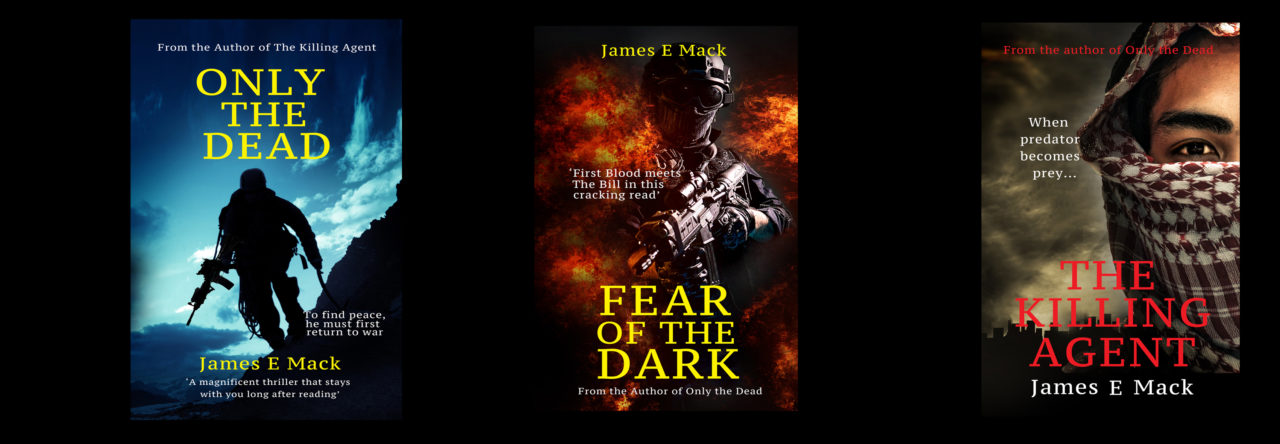
Have had such great feedback from my short story that I made free to the readers of my novels that I thought I would make some more free stuff available to give a further taster of my books and writing. Here’s a free sample from my last published novel, A Day Ahead of the Devil. I’ve made a couple of the first chapters free individually some time back but have put them together now for a bigger chunk of the story. Hope you enjoy!
A DAY AHEAD OF THE DEVIL – SAMPLE
1
SPECIAL OPERATIONS BARRACKS, GHAZNI PROVINCE, AFGHANISTAN, AUGUST 2021
Her eyes snapped open and she sprang from the thin mattress, reaching for her boots as she flinched at the explosions shattering the night. Heavy machine-gun fire accompanied a cadence of crumps from the mortars that were creeping closer to the small barracks where, until moments before, she had been sound asleep. Boots tied, Samira stood, scrunched her long, dark hair into a ponytail and secured it with a hairband, flinching as the concussion from a mortar round buffeted the thin metal walls of her room. They were getting closer. Bending, she scooped up her tac-vest and threw it over her head, fastening the Velcro side panels to fit to her body. Running her hands across the pouches, Samira nodded, satisfied that she had her full complement of ammunition and grenades. From the rack under the window, she retrieved her rifle, attached the sling to a clip on her tac-vest, removed and checked the magazine before reloading the weapon and cocking it. Another explosion shattered the windows and she turned her face away for a brief moment before picking up her helmet, giving a sharp tug on the attached Night Vision Goggles to ensure they were secure. As she donned the Kevlar helmet, Samira could hear the urgency in the voices carrying through the chaos of the fighting outside. Making her way towards the door, she smelled smoke and saw, for the first time, the flicker of fire from somewhere near the armoury. The voices were louder now and Samira identified some of them. Sergeant Khan directing a sniper to start finding targets. Captain Noor ordering someone to get air support immediately. Other voices calling urgently for information on the enemy’s positions. She burst out of her accommodation as a mortar exploded among the vehicles parked near the gate, pieces of Humvees now lethal projectiles in their own right as they scythed through the air at speed. Men were shouting as they spilled out from their sleeping quarters where, like Samira only moments before, they’d been resting peacefully. Samira ran at a low crouch towards the familiar figure of Captain Noor as he stood talking into a satellite phone and barking out commands to the commandos around him. He looked up as she approached and lowered the handset to address her. ‘This is not good. Somehow more than two hundred Taliban have entered the city and taken control. It appears that all the other Army and Police positions have been abandoned and the troops deserted. We are the only point of resistance and we must hold. I am trying to get reinforcements and air support but nobody is answering. And we have no radio comms, must have been knocked out.’ Samira shook her head. ‘I don’t understand, how could they get here so fast without us knowing? Where were the warnings from Headquarters? The Americans?’ Noor spat. ‘My suspicion is that our Headquarters have abandoned the Province, and us, to save their own skins. I’m just about to call Kabul and get them to support directly.’ Samira struggled to comprehend the enormity of Noor’s words. The rank and file of the Afghan military had been deserting in droves, abandoning towns, cities and provinces ahead of the Taliban advance. But the Ktah Khas, the Special Unit, her unit, had always fought. Always. It’s what made them different. What had made the difference for the past ten years. As the American draw-down had taken effect it had become apparent very quickly that the Afghan security forces would fail. But the Ktah Khas had not failed. Had continued with the fight. Even now, as the Taliban made great gains through the country, Samira and her fellow commandos had been taking the fight to the enemy. She was brought back to the moment by Noor grasping her shoulder. ‘Go to the roof with the sniper and give me updates on the enemy positions so that I can inform air support if they ever answer. GO!’ Samira spun and ran towards the main building complex, bounding up the external staircase and on to the roof. In the dim light she could see the sniper positioned at the southern end of the roof and she called out as she approached him, crouching as she ran. ‘Friendlies approaching rear, friendlies approaching rear.’ She slid next to the sniper, taking care not to bump him, lowered her NVGs and activated the laser sighting on her carbine as she spoke. ‘What have we got?’ The sniper, a new member to the unit, replied quietly. ‘At least two mortar teams out of view, recoilless rifles in closer and four or five groups closing in on all sides.’ Samira gave a sharp intake of breath. This was a significant force for their small unit to deal with at the best of times. But without air support? Insanity. She shook her head. ‘What’s your ammunition status?’ ‘Good. I’ve brought spare, might need some help refilling the empty magazines.’ The sniper moved suddenly. ‘Fifty metres, half-left, base of building, four men, rifles and rockets.’ Samira looked through her NVGs, following the sniper’s indication and saw the men at once, noting the shoulder-mounted RPGs or rockets as the sniper called them. Flicking her safety catch to the ‘fire’ position, she moved her green laser over the torsos of three of the men as she spoke. ‘Marking targets.’ The sniper grunted in affirmation and Samira squeezed her trigger, firing small bursts of rounds into the chests of the men she’d painted with her laser. The suppressor of her carbine muffled much of the noise and she heard the sniper’s shot as he took out the final Taliban fighter. Samira scanned the kill site for several moments to confirm all four were dead. Turning her head to observe the other side of the street, she noticed a furtive movement through the green hue of her NVGs. She focussed her attention on the area but saw nothing further to indicate anything suspicious. Samira continued to monitor the street to her front, looking for targets, determined to engage them before they could get close to the base. The sniper whispered to her. ‘They’ve stopped the mortars. Everything is too quiet.’ Samira nodded her agreement but felt no relief; in her experience such a silence was usually the prelude to a concerted attack. Adrenalin was coursing through her, a familiar sensation as she anticipated the close-quarter combat to come. Below her, within the confines of the concrete walls, she could hear whispered directives being ushered as each commando came to the same conclusion she had arrived at: Something big was coming. She heard Captain Noor speak in English to one of the squadron’s Team Leaders and tell them that there would be no air support coming. Samira realised with a jolt that if Noor was talking in English he must believe the Taliban to be within earshot. Is that possible? She was about to ask the sniper when a riot of noise erupted from all directions as the base came under heavy attack. Chunks of wall exploded as RPGs and heavy machine-gun fire tore into the defensive structures. Mortars rained from above in numbers far in excess of what they had already experienced. Samira tried several times to return fire from her position but the wall around the roof was being shredded by the incredible weight of fire from the Taliban. She rolled away from the wall and crawled to the other side of the roof as green tracer rounds ricocheted in crazed directions off the walls protecting her. At the other corner she took a deep breath and raised her head above the parapet, aiming her rifle. She saw a group of Taliban running across the wide road and engaged them immediately, their bodies dropping on to the hard-packed dirt road as her rifle clattered and bucked in her shoulder. Samira dropped back behind her cover just as a heavy burst of fire tore into the wall sending chunks of stone into the air. She rolled away from the area and tucked herself against another corner, changed magazines and tried to work out what she was going to do. The noise was horrific; a constant barrage of explosions and weapons’ fire tearing the defences of their small base to pieces. She looked up as the sniper sprinted towards her and dropped to her side breathing heavily. ‘I can’t do anything from up here, they have us surrounded and pinned down. I’m going down to help with the fight there. Why is there no air support?’ Without waiting for an answer, he took off at a crouch and made it to the staircase, quickly dropping out of sight. Samira rose to her knees to follow him when a giant explosion rocked the entire building, deafening her and knocking her over. She shook her head and pushed herself up just as a second, more violent blast lifted the entire roof several feet and lit up the sky in a hellish illumination of red and orange. Samira’s breath was knocked out of her as the roof dropped and began collapsing under her feet. With no time to collect her thoughts she staggered towards the stairwell as giant slabs of the roof began falling into the darkness beneath her. She was dimly aware of an increase in the shooting below but focussed on making it to the stairs. As she reached them, she noted that they remained mostly intact but were twisted and buckled in some places. In the compound below she saw a giant hole in the perimeter wall and the warped, burning chassis of a car: The standard Taliban suicide borne vehicle bomb. She had no doubt that the explosion on the other side of the base had also been a car bomb. The stairs moved under her weight but didn’t come away from the wall. Samira took the steps several at a time, determined to get to the ground before they collapsed underneath her. They groaned in protest and sagged a little but they held and she gave an unconscious grunt of gratitude as her feet hit the earth of the compound. She began running towards the last place where she had seen Captain Noor but dropped to the ground as a stream of bullets zipped past her face. Samira rolled on to her side and raised the carbine up to face the threat. Two Taliban ran towards her, adjusting their aim as they approached but she engaged both men before they could focus on her prone figure, cutting them down mid-stride. Without pause for thought, she was on her feet again, sprinting towards the Operations Office and, hopefully, Captain Noor. All around her, heavy fire was being exchanged at close quarters as the Taliban continued to breach the base. Her ears were ringing but she could still hear explosions and feel the blast waves as grenades and RPGs detonated within the walled compound. A movement caught her eye and in the darkness beyond, she saw a green laser being waved around in a circle and was grateful for the signal that identified the rally point. As she reached the location, she saw it was a small corner that had been fortified with sandbags and whatever solid cover the commandos behind it had managed to grab. Samira clambered over the raised protection and landed on her back before rising to her knees and taking in her new surroundings. There were six of her fellow commandos returning fire while several others were sat with backs against the sandbags, yelling into telephones. Samira saw that Captain Noor was among them, alternating between a satellite phone and a conventional one. She could tell by his expression that things were bad; she had never seen concern on his face before but now he was shouting into the phones, frustration and anger contorting his features. She was about to make her way to him when the commando standing beside her dropped suddenly, collapsing to the ground. Samira grabbed him by the straps of his tac-vest and turned him over to check for injury. The blackened eye socket pooling dark blood and the limp body told her the commando was dead, not injured. Taking several of the dead man’s magazines and a couple of grenades from his tac-vest, she stuffed them into her own pouches. She then sprang up, rifle on aim and took the commando’s place. Her first burst cut down a Taliban fighter who was already aiming his RPG at their position. As he fell dying to the ground, the weapon went off and the projectile screamed harmlessly into the night sky. Movement to her left caught her eye and she turned her weapon to face it but lowered her aim as she identified the sniper and another commando sprinting towards her. Samira moved to one side as the men leapt the small barricade and took cover. She turned her attention back to the fight and opened fire on a small group of Taliban who were attempting to reach the stairs. She saw two of them drop but the other pair retreated around the corner of the building and out of sight. Someone stood beside her and she saw that it was the sniper, long rifle up on aim and firing into the darkness beyond. Samira scanned the area for further targets but none presented themselves to her. She could hear Captain Noor talking to someone on the phone and cursing whoever was on the other end. Again, so out of character from a commander they respected for his calm, considered leadership. The sniper bumped his hip against hers to get Samira’s attention. ‘He’s not going to get any air support. I spoke to my cousin who is a policeman in Kabul and he told me it’s chaos up there as all the foreigners are flying out of the country.’ He turned his face to look at her. ‘They’re leaving. The Americans, the British, all of them. They are running away.’ Samira stared at the sniper as he turned his attention back to monitoring his fields of fire. It couldn’t be true. Their American partners had sworn to them that they would always be here. Yes, in smaller numbers but the Special Forces would never leave Afghanistan. Would always be there to provide air support and intelligence to the Ktah Khas. She shook her head; the sniper’s cousin would have heard a rumour and, in typical Afghan fashion, exaggerated the facts to make it more interesting. But the seed of doubt remained. Even when air support hadn’t been immediately available to their missions in the past, a reason and alternative was always provided. This time felt different: Getting no response to their support request was unheard of and for the first time since the battle began, Samira felt a small stab of fear in her stomach. She’d been with the unit for over three years and had been a commando with the British-mentored CF 333 before that. Had fought hundreds of engagements with the Taliban, ISIS-K and Al Qaeda. Been wounded and injured many times over the years but had never believed her death was imminent. Until now. She turned to look at Captain Noor just as the sniper screamed a warning. ‘CAR BOMB FRONT ENTRANCE!’ Samira threw herself to the ground, covered her ears and opened her mouth as the air was split by an apocalyptic explosion and a blast wave that destroyed the cover around the commandos. She shook debris off her back and legs and turned to face the direction the blast had come from, knowing that a follow-up team of shooters would be racing towards them. Around her the other commandos were doing the same and a heavy weight of fire was soon streaming across the compound, the bullets tearing into the dozen Taliban attempting to cross the open ground. There was a lull when the last man fell and Samira used the time to change magazines and take stock of their situation. Looking around the remnants of their ruined position, she saw four bodies on the ground and two injured receiving treatment from the medic. Their cover from fire now consisted of a mere two levels of sandbags, barely enough to lie behind for protection. Captain Noor crawled forward until he was in their midst and Samira moved to one side to give her commander some room as he addressed them quietly. ‘The situation is bad. We are alone and no help is coming. No help is coming ever again. The Americans are leaving Afghanistan now. They started last night and will all be gone by today. The world has turned its back on us.’ He paused and shook his head. ‘From what I have learned from my contacts many of our senior officers have also run, taken flights to Dubai and Qatar to go and count their money.’ He spat on the ground before looking up again. ‘The Taliban are expected to reach Kabul by tonight at the latest and will probably take it with little to no resistance. Who will fight them without the support of our allies and no command structure from our own security forces?’ Samira cleared her throat before speaking. ‘So, what is the plan?’ The Captain let the question hang in the eerie quiet before replying. ‘There is one piece of good news. All Ktah Khas commandos and other special ops soldiers will be evacuated from the country under the order of the Americans and British. Their families will also be allowed to go with them.’ A murmur ran through the small group and the Captain raised his hand. ‘But . . . the airlifts will only take place from Kabul airport. Nowhere else. And by the time we make it there, the city will be under Taliban control.’ The sniper faced his commander. ‘What do you want us to do, Sir? There’s too many Taliban out there for us to kill. Another attack like that last one and we will be defeated.’ The Captain opened his mouth to reply but was stopped by the sound of a voice coming from a loudhailer beyond the compound walls. ‘Captain Noor, Captain Noor. Can you hear me?’ The commandos remained silent and focussed on the darkness around them as the disembodied voice continued. ‘Captain Noor, please answer me. You and your soldiers have put up a very brave fight. There is no need for anyone else to die here. Let us talk like men.’ Noor cleared his throat and shouted his reply. ‘I can hear you. Who are you and what do you want?’ The reply was immediate. ‘Captain Noor, I am Qari Hazrat, commander of over two hundred mujahideen fighters surrounding your base. We control the entire province and it is now part of our glorious Islamic Emirate. By nightfall we will take Kabul and clear it of the infestation of parasites and blasphemers who sit on their gilded thrones. Then the Taliban will rule this Islamic Emirate by the will and laws of Allah and his prophet Mohammed, peace be upon him. So, to keep fighting is not necessary. Surrender, give up your weapons and you will be free to return to your homes if you give your word that you will never take up arms against the rightful rulers of the Emirate.’ The silence was almost absolute, broken only by the occasional wail from the wounded beyond the walls and the cackling from fires burning within the base. Noor leaned into the group as he spoke in a quiet voice. ‘I don’t trust him. I don’t trust any Taliban. I don’t believe he would honour such a surrender. But . . . we can’t defeat them. No one is coming to our aid. I can’t order you what to do anymore. The time has come for each of you to make your own choice.’ The sniper spoke up, voice raised in frustration and fear. ‘What choice? Surrender or die?’ The Captain regarded him. ‘There is another option; run. We fight our way out of here, make it to the streets and find a way to Kabul.’ The sniper shook his head. ‘They have every street blocked, I saw it from the roof. And even if we did survive and get out of the city, you heard him, they have control of the whole country.’ Samira met Noor’s gaze. ‘I’m running. There’s no choice for me. You know what will happen if those animals get their hands on me, no matter what they promise.’ Noor nodded. ‘I’m running too. We are Ktah Khas; the Taliban know we have been responsible for killing so many of them that I don’t believe they will let us go.’ The sniper leaned in, hissing his objections. ‘Where are you running to? You really believe you can make it all the way to Kabul? And even if you do, then what? Check in at the Ariana desk, enjoy some green tea in the departure lounge while you wait for your flight? No! Everything will be in Taliban hands, including the airport. I think we should put down our guns and negotiate.’ Noor’s response was halted by the interruption from the loudhailer beyond the walls. ‘Captain Noor, time is running out. I need your answer now. It is a good offer for you and your men. Take it but take it now as I am losing patience.’ Noor spoke quickly. ‘Show of hands; who is running?’ Samira looked around and saw that, along with her and Noor, only Sergeant Khan raised his hand. Noor spoke again. ‘Three of us. That leaves six who want to negotiate, yes?’ Samira confirmed the count and nodded at Noor who pointed to the sniper. ‘You. You will take charge of the group who want to negotiate. It is better the Taliban hear one voice to avoid confusion and honour their agreement. So, speak to Qari Hazrat now. Let him know you will be coming out of the front entrance, unarmed, carrying wounded and that you accept his conditions.’ The sniper nodded. ‘What are you going to do?’ Noor shook his head. ‘No. It’s better you know nothing of our plans in case they change their minds and torture you. If you know nothing you can tell them nothing. Now speak before he changes his mind.’ The sniper paused for a moment then turned, placing his rifle on the ground and cupping both hands to his mouth as he yelled. ‘We accept your merciful terms and are coming out, unarmed and carrying our wounded brothers.’ There was silence for several seconds before the reply. ‘A wise decision. Come out of the front entrance in single file unless you are helping the wounded. If we see any weapons we will kill you all.’ The sniper motioned for his group to take control of the casualties. Captain Noor gripped the younger man’s shoulder. ‘May Allah bless and care for you brother. Go now and know we will do nothing until all of you have left.’ With that, Noor grabbed Samira and Sergeant Khan, pulling them out of earshot from the remainder. ‘Plan: Samira, prepare a Humvee for us. Khan, you and I set demolitions to breach the wall on the south perimeter that will give us direct access to the widest part of the road. This should catch them off-guard; they’ll be expecting any escape to come from one of the gates. We can’t move the vehicle until the breach so we will set it, join Samira in the Humvee, detonate the charge then drive through the gap. We go fast and we go hard, try to use as many of the main roads as possible for speed then cut west on the tracks when necessary. If we lose the vehicle we steal another by whatever means we can. The quicker we reach Kabul, the sooner we know what we are dealing with. Questions?’ There were none. Samira ran to the vehicle parking area and selected one of the Humvees furthest away from the damaged ones. The vehicles were always ready for immediate deployment but she went through the checks anyway. The .50 Calibre heavy machine gun was loaded and its complement of ammunition stored as she had expected. Grab-bags of medical, food, water, ammunition for the carbines and batteries for the NVGs and other equipment were all secured in their allocated spaces. Four M-72 light anti-armour weapons strapped against the vehicle framework completed the inventory. After a quick check that the ignition fired, Samira turned the vehicle off, opened the doors and waited. She couldn’t see Noor and Khan from her position but knew from experience the men would be quick. She attempted to slow her breathing, nerves kicking in now that she was not active. She watched as the small column of those who chose to surrender shuffled past her, the healthy supporting the weight of the wounded. Their distorted shadows danced like demons in the red hues from the light cast by the fires and the smoke plumes drifting across the compound. Samira didn’t believe the Taliban would hold up their side of the agreement. They loathed the Ktah Khas. Hated them worse than they despised the Americans even. No, Samira had no faith that her colleagues making their way to the front entrance of the base would ever see their homes again. A Taliban prison perhaps, but not their homes. Movement drew her attention and she saw the figures of Noor and Khan sprinting towards her. Noor leapt into the passenger seat and Khan took the rear, the Sergeant pushing himself out of the top cover and taking control of the .50 Cal. He was also watching the movement of the sniper’s group as they made their way towards the front entrance. Monitoring their progress, Khan counted down the distance the group had to cover before reaching the gate and updated Noor and Samira. ‘Thirty metres . . . twenty metres . . . ten metres . . . last man through.’ He dropped back into the vehicle as Noor fired the remote detonation unit. The explosion shook the compound and the flash lit up the entire area as Samira started the ignition and floored the accelerator, propelling the vehicle forward. Using only the infra-red headlights and her NVGs, she sped towards the roiling smoke and dust cloud and saw the wide breach in the wall. They hit the rubble at the base of the breach and the Humvee was airborne for a brief moment before the vehicle landed, bounced then skidded as Samira turned it on to the wide thoroughfare of the road. Khan was already back up and manning the machine-gun as Noor stared ahead and gave clear directions. ‘Roadblock, thirty metres, no alternative route. Engage.’ Sergeant Khan opened up with the heavy machine-gun, the large rounds slamming into the vehicles and men blocking the road ahead. Samira aimed the Humvee at a point where two vehicles had been reversed against each other, knowing that they would provide less resistance than the front of a car where the heavy engine block was situated. There was a pause in the firing as Khan dropped back down and secured himself an instant before the Humvee smashed into the roadblock, the big American vehicle sending the smaller cars spiralling away into the darkness, metal screeching and sparks flying. Khan was back up in the turret as the Taliban opened fire from behind them, the booming reply of his heavy machine-gun soon silencing even that token resistance. Noor clapped Samira’s shoulder. ‘Good work. Take the next left then immediate right. After that it’s only a couple of kilometres to the highway.’ He was silent then, his attention focussed on the streets around them as the Humvee sped along the deserted roads. The streets were dark and empty for the most part, the occasional corpse on the road the only sign that any life had existed at all. There was no pursuit and other than the sounds of sporadic gunfire in distant parts of the city, almost no indication of further Taliban presence. Despite this, Samira’s stomach was tensed in anticipation of ambush or encountering another roadblock. Risking a quick glance at Noor she could see from her commander’s intense focus to their front that he was feeling the same way. Samira continued to follow Noor’s directions and breathed a sigh of relief when they burst out of a side street and hit the main highway, the Humvee’s tyres squealing in protest as she spun the wheel to point the vehicle north. North to Kabul.
2
KABUL AIRPORT, AFGHANISTAN, AUGUST 2021
The C-130 Hercules dropped suddenly and Nick Morgan’s stomach lurched as the big aircraft descended at speed, a defence against any anti-aircraft missiles targeting the plane. Grabbing the webbing straps above him, he pulled himself upright and looked out of the window at the chaos he and his team were about to enter. On the aprons and runways below, he could see people and vehicles moving around in big numbers, far more than any normal airport should ever have. Civilian airline jets taxied past military aircraft with various national flags prominent on their tails. Beyond the walled perimeter of the airport, he could see columns of dark smoke rising up from various locations around the city. Nick adjusted his gaze to look at the area adjacent to the boundary and saw thousands of people corralled into the streets outside the airport entrance. He could imagine the panic and chaos on the ground as each Afghan fought for entry to the airport and the chance to escape the coming Taliban. Dropping back in his seat, Nick thought about the operation ahead and what little information he and the team had to go on. Plucked from their support role in Kenya to the Secret Intelligence Service, SIS, or MI6 as they were known to the wider world, and straight on to a plane to Afghanistan. Their mission directive covered by a rather vague ‘key personnel extraction in advance of hostile actors’ imminent ownership of operational terrain.’ Of course, they’d been keeping up with the news and had received some intelligence briefs from the analysts on the situation in Afghanistan, but these had been general in nature. His team’s operational focus honed on their current area of responsibility, East Africa and the resurgent terrorist threat. That had changed with the call and subsequent online meeting with the Operations Officer, ordering Nick to shelve whatever he and the team were doing and prep for immediate deployment to Kabul. Civilian profile and ready to hit the ground running on arrival. He’d been advised to take vehicles with them, another sign that the situation on the ground was pretty volatile. Some support assets would be available and they’d be working closely with and possibly directly to, British Embassy, Foreign and Commonwealth Office and the SIS Head of Station. That convoluted chain of command in itself warned Nick that there were severe challenges ahead for him and the team. When he’d asked the Ops Officer outright how bad the situation in Kabul was, he’d been given the standard euphemism of ‘fluid’; a term usually reserved for situations of utter chaos. Nick looked down the aircraft at the vehicles strapped to the deck and observed his twelve-man team sat either side of them as the C-130 spiralled into its fast, final stage of descent. Most of the guys leaned back in their seats, eyes closed, some listening to music, others lost in their own thoughts staring into space. Every man had spent time on the ground in Afghanistan at some point with most having completed multiple tours. Nick had been deployed to the country regularly since 2001, when he’d been a young Special Air Service Trooper on secondment to the Special Boat Service, the SBS. Originally, he’d felt deflated at the thought of not deploying to Iraq with the SAS, his own regiment. But the intensity of combat he’d experienced on that first deployment with his maritime counterparts had given Nick a depth of experience which rivalled that of even some of the more seasoned special forces soldiers. Since then, he’d returned regularly to Afghanistan in various roles: Conventional assaults, High Value Target detention ops, Surveillance, Support to SIS Stations in Kabul and Kandahar, Operational Mentoring of Afghan Partner Units. Twenty years of operations had taken Nick from Trooper to Warrant Officer second class – WO2, in the Regiment and he was regarded as safe pair of hands in a tight spot. And this current situation, as far as Nick could tell, definitely qualified as a tight spot. His last briefing before wheels-up in Nairobi had been that lists of the personnel Nick and his team were expected to extract from Kabul would be compiled and waiting for them on arrival. But if experience had taught Nick anything it was to prepare for the worst and hope for the best. Judging by the chaos unfolding below him, Nick had very little confidence that the lists would be ready and waiting. But he’d been here before. They all had. Dropping into ‘fluid’ situations and getting straight to work, relying on no one else to bail them out when things didn’t go to plan. He doubted that this operation would be any different. The plane bounced slightly as the wheels touched down and the engine sound increased as the C-130 braked hard, moved into a slow taxi and turned. After a minute the aircraft came to a stop and the crew made their way through the plane, unshackling the vehicles and cargo ready for an immediate unloading. Nick stood and stretched as the ramp at the rear of the aircraft was lowered and the light poured in. He picked up his chest rig and pulled it over his head, the weight compounded by the Kevlar plates and magazines of ammunition stuffed into the pouches. He secured the Velcro side flaps and, grabbing his pack and rifle, walked between the vehicles and the fuselage, down the ramp and into the madness of Kabul International Airport. The heat and noise were the first sensations he registered and as he walked down the short ramp, the frenetic activity all around him the second. Aircraft and vehicles moving in all directions and even for the brief few seconds he watched, Nick saw one near miss as a Kam Air jet almost collided with a large bus that was speeding between stands. He lowered his sunglasses against the glare and pulled his satellite phone from his pack and found the pre-set number he was looking for. As he waited for the connection he glanced back at the aircraft and saw his team busy unloading it with the assistance of the Royal Air Force crew. A voice answered his call and he turned his attention back to the task at hand, his reply short and to the point. ‘Hi, it’s Nick. We’re wheels down. Where do you want us?’ He listened as his question was answered and directions given. ‘Thanks, we’ll be with you in about ten minutes.’ Nick stowed the phone and turned back to brief his team. ‘Okay, once we’re good to go we’ll make our way to the QRF building at the other side of the Military Terminal. They’ve got us an office set aside to use as an Ops Room and Station is going to brief us on current situation.’ The men nodded their understanding and turned back to getting their equipment and vehicles off the aircraft, Nick stepping aside as the first Toyota SUV was driven down the ramp. He looked up as the sound of gunfire carried over the din within the airport and wondered if it was incoming or outgoing. From what he understood, the Taliban were already in Kabul but had not attacked the airport for reasons best known to themselves. The UK had deployed around seven hundred soldiers from 16 Air Assault Brigade, many of them Parachute Regiment, Nick’s regiment before he had passed SAS Selection. That had been one small piece of welcome news; he was bound to know, or one of his team would know, a couple of decent contacts within the Paras that they could call upon for some help if needed. A shout caught his attention and he saw Luke, one of his Team Leaders, giving him the thumbs-up that the vehicles were packed and ready to go. Nick moved to the first and jumped in the passenger seat as his team followed his lead and mounted up in the three cars. Nick looked at the driver, a Mobility Troop Corporal from D Squadron. ‘You know where you’re going John?’ ‘Yeah Nick, been out here a couple of times and remember it pretty well.’ Nick nodded and turned his attention to monitoring the chaos surrounding them as John negotiated around vehicles and aircraft who seemed for the most part to be far less concerned with what was going on around them than the SAS team were. They were approaching a strong barricade and Nick noted that it was British soldiers manning the defences, their vehicles bristling with various calibres of machine-guns ready for any eventuality. John slowed the vehicle down as they approached and lowered his window. Ahead of them, the vehicle-mounted weapons were immediately turned to cover their arrival. Nick watched as a Lance Corporal silently gestured for them to hold up their Identity Cards. Each man held his ID card out of the window and after several seconds of studying them through his rifle’s optical sight, the Lance Corporal beckoned them to approach. When Nick’s vehicle reached the Lance Corporal, their ID cards were checked again, much to the driver’s impatience. ‘What’s the point of checking them twice mate? They’re either good first time or they’re not.’ Nick could see the Lance Corporal weighing up who these men were with their Army IDs, armed and travelling in civilian clothes, before giving his reply. ‘We check twice; once at safe range just in case it’s another suicide bomber, and once close up in case they’re forged. We got caught out with a few of them on our first couple of days. Where you lot headed?’ Nick leaned over and replied, deploying the team’s basic cover story. ‘QRF building mate, we’re security team for the Foreign and Commonwealth Office staff.’ The Lance Corporal raised his eyebrows. ‘FCO? Good luck, they’ve been nothing but a pain in the arse for us since we arrived. Maybe you lot can sort them out, let them know we’re not here to run around after them all day.’ Nick grinned. ‘I hear you. We’ll see what we can do.’ The Lance Corporal made a hand gesture and a barrier was raised and a heavy truck reversed, opening a gap between the defences that Nick and his team manoeuvred through. As they made their way along the row of buildings, Nick noted the lines of people being hurried towards waiting military and civilian aircraft and for the first time, appreciated that a full-scale evacuation was underway. The tail markings of German, French, Dutch, British and numerous other nationalities on the planes underlining the fact that every country was leaving. A complete evacuation after twenty years of fighting. Although the term evacuation suggested at least some semblance of planning and execution, what Nick had witnessed so far seemed more akin to fleeing. He turned back to the driver as they passed a row of armoured vehicles similar to the ones they had encountered at the checkpoint. ‘Is that SFSG?’ The driver nodded. ‘Yep. Not sure how many but definitely their wheels.’ This was another piece of good news for Nick. SFSG, the Special Forces Support Group, were veterans of many high-intensity operations. Allocated directly to Special Forces, the Paras, Marines and RAF Regiment soldiers that made up their ranks thrived on their role in support of SAS and SBS tasks around the globe. Nick was happy they were here as their mobility and firepower would be a massive asset if things got close to the wire for he and his team. The car slowed and Nick turned his attention to the building the driver was turning towards. People were rushing in and out of the entrance and dozens more were spaced around the immediate vicinity shouting into mobile phones, hands cupped to ears to drown out the incessant din of aircraft engines and voices. The car came to a halt and Nick exited the vehicle, grabbing his rifle and rucksack. His team followed suit with each driver locking the vehicle behind them. John nodded towards the building and addressed Nick. ‘I’ll stay here and guard the cars and the kit Nick. There’s way too many people milling about and no security that I can see.’ ‘Good call, John. I’ll see about getting a couple of spare bods attached for admin and security while we’re located here.’ With that, Nick led his team towards the entrance. Around him he identified German and French being barked down mobile telephones, urgency and frustration apparent in every call. When he reached the entrance, Nick pushed his sunglasses up on his head to adjust for the dim interior. Two armed soldiers stopped his team and again, checked their IDs and their mission before allowing them to proceed. Nick waited until all his men were through the check then led them along a corridor bustling with people rushing past or talking loudly into phones. Remembering his earlier conversation, Nick found the stairwell he was looking for and led his team up, cursing as he was bumped by two Polish officers running down the stairs. On the next floor, he found the office he was looking for, marked with a plastic British flag and a printed Foreign and Commonwealth Office sign underneath. He pounded his fist on the wooden door and heard the immediate response of the locks being turned. The door opened slightly and a pale-faced young man in wire-rimmed glasses looked at him. Nick raised his ID card. ‘Nick Morgan and Team. Security. Stuart Ashby is expecting us.’ The younger man swallowed and glanced at Nick’s tac-vest and weapon before nodding. ‘Yes, okay, he’s in a meeting just now but should be done in a minute. Come in and you can wait.’ He pulled the door open and Nick saw the large office space was crammed with people standing and seated over desks, telephones and computers. The noise was constant with all manner of British dialects competing with ring tones for dominance of the space. Nick and his team followed the young man and he led them to a smaller room where another group of people were furiously typing on laptops or mobile telephones. Some of them glanced up and stared at the newcomers for several seconds before turning their attention back to their own tasks. There wasn’t much free space so Nick and his men slotted themselves between individuals where they could. The young man touched Nick’s elbow to get his attention again. ‘The meeting should be over any minute now and I’ll grab Stuart as soon as I see him and point him your way.’ Nick nodded his thanks and leaned against the wall, looking back into the main room and the frenetic activity within it. From what he could gather from the snatches of dialogue he was picking up, the frantic conversations seemed to be focussed on identifying and confirming who was to be evacuated and requests for more time and assets with which to achieve this. He could also sense something else in the room. Less tangible perhaps, but none the less real for that: Fear. Now that he’d identified it, Nick could see the physical manifestations of fear on the individuals’ faces. The wide eyes, clenched jaws, beaded sweat on foreheads, flushed cheeks. These people were scared. Nick assumed that for most of them, this was the first time they would have been involved in anything like this. The first time that their diplomatic status had come crashing into the real world that their political influencing had created. Nick reached into his pocket and retrieved his mobile phone, powering the device up and retrieving his messages. He stabbed out a quick missive and sent it, watching for confirmation that the message had gone before turning the device back off again and stowing it away. It was a deal they’d made with each other not long after they’d got together. That no matter where they were or what they were doing, they would always check in with each other and say where they were and how long they might be out of communication. Sometimes they couldn’t say directly but in veiled speech, they could usually get their location and information across without any security compromise. Nick’s reminiscing of his personal life was cut short when his name was called from the main room, and he turned towards the familiar, upper-class voice as Stuart Ashby, Head of Station for SIS Kabul approached him. Nick regarded the tall, angular figure with the unruly mop of dark hair and extended his hand to meet that offered. ‘Stuart, good to see you again. How’s tricks?’ Stuart Ashby paused and regarded the SAS man with a sardonic smile as he rubbed his tired eyes. ‘Hello Nick. Good to see you again too. Tricks, as you put it, are not good. Not good at all. In fact, to put it bluntly, tricks are fucking awful.’ Nick raised his eyebrows in surprise at the profanity. He was now under no illusion that things were bad in Kabul. Despite what he had personally observed since his arrival, the erudite and urbane Stuart Ashby’s use of the F-word was the most serious indicator yet that Nick and his team were definitely in a ‘fluid’ situation.
As many of you will remember from my previous posts, I have recently moved house, down the coast to a lovely little village where we are settling in nicely. As part of the moving process, I have been coming across bits and pieces that I’d squirrelled away and completely forgotten about for years. Looking back through this collection of dust-covered objects has been a big hit of nostalgia as well as being quite funny in some cases.
Case in point; various passes and IDs that I’ve held in different countries throughout the years. While there is the almost comical visible timeline of watching my hairline recede from year to year, each pass or badge brings back a flood of memories in the way that a familiar song will transport the listener back to the time and place where it holds the most relevance. For me, these IDs take me back to the time and place where a memory has been locked in because of an activity or event that the pass or badge reminds me of. For example;
The first time I realised that my official, government-issued, ‘all access’ badge meant nothing to the terrified conscripts manning checkpoints in a Middle Eastern city as I was dragged from the car and given a sound beating. For nothing more than pointing out the very clear writing on the pass that stated ‘do not stop or search’. Confidence and humour partnered with the sharing of a packet of cigarettes defused the situation and stopped the car being searched and my guns and comms being discovered. And me being hustled away to a filthy jail cell in one of the city’s many police stations for some seriously enthusiastic interrogations. As I looked at the photo on the pass of the younger me with an enviable hairline, I smiled at the memory of passing out cigarettes to a bunch of scared conscripts who seconds before had inflicted the lumps and bruises on my face and body. Chuckled as I recalled my attempts at jokes at my own expense, my pidgin Arabic causing as much mirth to my captors as the content itself.
Or another time, approaching a coalition checkpoint in a different city, adhering to the rules and processes as I had done dozens of times before; vehicle pass prominently displayed on the dashboard, personal passes held high out the window as my car crawled towards the armed American guards. Only to be opened up on by one of the soldiers, his rounds tearing through the soft skin of the car bonnet and pinging off the hardened components of the engine below. His colleagues bellowed for him to stop and I waited until the situation was under control before I slowly opened my door, hands high in the air still holding my passes, and walked over to the soldiers.
‘WHAT THE ACTUAL F**K GUYS? YOU CAN SEE I’M BRITISH!’
There was a brief pause as the sheepish looking soldiers turned to the shooter in a manner that demanded he explain the situation. With a shrug and a nod of his head towards my car, he simply said, ‘Sorry dude, but we were told to watch out for a suspicious, black BMW.’
I raised my eyebrows. ‘With British vehicle pass and personal access passes?’
He paused and inclined his head to one side while he gave my question some thought. ‘Nah . . . just the car, man.’
Some years later, I recounted this incident to a friend of mine who had also carried out some clandestine work in that area and he laughed and told me that an entire checkpoint had opened up on him and his colleagues and that even as they’d de-bussed and taken cover and yelled ‘WE’RE BRITISH, WE’RE BRITISH!’ They’d been answered with an American drawl from behind the Hesco Bastion fortifications, ‘WE DON’T CARE!’
Or the time in Mozambique where, tired of the standard Friday shakedown from local Traffic Police, I created a simple Word Doc with the insignias of the Interior Minister, my company, and a small form below these motifs. When pulled over for the regular ‘pay the bribe or go to jail’ on Friday afternoon, I smiled, nodded, and produced the document from the glove compartment of my pick up truck, explaining that the Interior Minister had decreed that all police officers had to complete this form with their name, rank, department, details of offence, and punishment given. As the Interior Minister had direct oversight for the safety and security of my company’s contract, he needed to be fully informed of every interaction with local law enforcement. It was, of course, a massive bluff capitalising on 2 main elements; Firstly, the poor literacy rate among rank and file law enforcement, and second, the traditional fear of those in power in an autocratic administration. Within weeks my trusty white Toyota Hi-Lux was being waved through every checkpoint with a sneer of disgust from the disgruntled cops.
My favourite though, is the last pass I came across. It was some years ago when I was on a NATO project, advising and mentoring senior brigade staff deploying to hostile countries. The individual in charge of creating and issuing the access badges for one of the exercises was, unfortunately, a good friend of mine. And in the spirit of good friends seeking any opportunity to get one over on their oppo, this was the badge I had to wear, and answer to, for the two-week duration at every meeting and briefing during the exercise.
As I say, unfortunate that he was a good friend in a position to get one over on me. However, had the roles been reversed, I have no doubt that I would have chortled with pleasure as I created the new access pass for Mr Hugh Jass or something similar . . .
Anyway, a short and sweet post, just fired out as I came across a box of old passes and name badges from various corners of the world and thought I’d share a few of the stories behind them.
How battlefield technology in Ukraine is a game changer for modern wars
In the shadowy world of covert intelligence operations, in the past year, there have been two major standouts for their use of technology to strike a devastating blow to their adversaries. I’ve already spoken about the Mossad ‘Grim Beeper’ pager operation that decimated Hezbollah and what a stunning operation that was from conception to execution. More recently, however, the Ukrainians demonstrated just how impressive their innovation and use of technology has become. Rather than writing about it, take a look at this cracking little video which really explains in simple terms the Ukrainian Operation Spider Web.
I don’t think there is a single intelligence professional in the world who didn’t watch this operation and fail to be impressed. The planning, logistics, training, adaptation, rehearsals, constant alterations, coordination, but, more than anything, the fact that nothing was leaked, is incredible in and of itself. The Russian surveillance net over Ukraine is comprehensive to say the least, encompassing all platforms of SIGINT, ELINT, OSINT, HUMINT etc. If, as the Ukrainians state, this operation was in the planning phase for 18 months, the fact that it wasn’t discovered by the Russians is nothing short of remarkable.
One of the more interesting questions being raised at the moment is: Who knew?
According to President Zelensky, this was an organic, Ukraine-driven operation carried out as preemptive self defence on receipt of intelligence that Russia was planning an imminent bombing campaign. NATO leaders claim no advance knowledge of the operation. And in America, President Trump’s public reaction on his platform of choice was that the USA should have been informed as they should be leading on all decisions. Taken at face value, it would appear that Zelensky assessed Trump’s cosiness with Vladimir Putin as a massive risk to compromising the operation if he informed the Americans. Indeed, in Trump’s subsequent telephone call with Putin, not Zelensky, Trump’s language indicated more sympathy for the Russian position than that of Ukraine. So, again on the face of it, Zelensky was right not to have informed the Americans. But could Ukraine really have pulled off this masterstroke alone?
Many of my former colleagues and associates are split on this. The nay camp point out that the requirement for up to date satellite imagery of the target airfields alone, required external assistance and capabilities. They highlight the fact that the furthest target in Siberia is actually closer to Alaska than it is Ukraine. The aye’s point out that Ukraine has been becoming more and more innovative and successful in their deployment of battle tech as well as their extensive use of HUMINT sources in Russia to aid targeting and surveillance. They reminded me of the fact that very recently, Putin’s helicopter was scrambled to safety after a Ukrainian incursion surprised the Russian’s with it’s alarming proximity to the Russian leader’s location.
The CIA have, until recently, had a very close working relationship with the Ukrainians, in fact, it’s probably the closest partnership I have seen for decades. This changed radically with the Trump administration entering the White House.
Or did it?
The CIA program would not have been pulled instantly. A little known fact is that, from 2015 onwards, the CIA and the USA as a whole, gained a trove of intelligence on Russian capabilities provided by the Ukrainian intelligence services. Key information on leadership, ORBATs, decision making chains, military and cyber technology in the battle space, and lots more. Intelligence that saved the USA billions in collection efforts and streamlining countermeasures, further reducing operational costs. The CIA also used Ukrainian intelligence operatives abroad, posing them as Russians to infiltrate or recruit assets on the CIA’s behalf. In return, the CIA mentored and trained the Ukrainian intelligence services to a very high standard, to the point where the pupils were outperforming the masters as necessity became the mother of invention. On more than one occasion, the CIA had to pull on the reins of their protégés in order to assess the fallout from surprise operations the Ukrainians were about to initiate. The relationship between the Agency and the Ukrainians was formed and fostered by a very capable CIA Station Chief, nicknamed ‘Santa’ by the Ukrainians for his snow-white beard. Santa drove the working partnership and made deep connections with his counterparts who even today, speak very fondly of him.
When the Trump administration had time to look at what the CIA were doing in Ukraine, they were probably stunned at the breadth of the Agency’s involvement. With Trump seeking closer ties to Putin, the CIA was directed to minimise their activity. I’ve heard from sources that, while this was anticipated and many facets of the ongoing operations were reclassified as ‘observing or mentoring’, it was still a blow to the teams on the ground and the Ukrainians themselves. Fast forward to the debacle of Zelensky’s visit to the Oval Office and Ukraine was left in no doubt that the new administration was not sympathetic to their cause. In fact, quite the opposite. And not because Trump et al were concerned about peace in the region, but because Zelensky had previously refused to make a false statement regarding Hunter Biden, former president Joe Biden’s son. Trump had personally requested that Zelensky make a public, formal statement that Hunter had been involved in illegal/underhand business deals in Ukraine under his father’s umbrella. Zelensky refused to compromise himself and inevitably found himself, like anyone else who didn’t kiss the ring, on Trump’s ever expanding shit list.
After the disastrous White House meeting, the USA then switched off all intelligence sharing with Ukraine, leaving the country reliant upon European partners to maintain forewarning of Russian attacks and assist in targeting. After a short period where Zelensky’s public apology was seen as acceptable to the White House, the intelligence sharing was resumed. Where we read ‘intelligence sharing’, we should interpret that as CIA and NSA in the main. So, even though we don’t hear anything about them, it is highly likely an operational force of the CIA remains active in Ukraine. Would they have had any involvement in Operation Spider Web? Undoubtedly. At one end of the scale, it may have just been knowledge of the operation, a courtesy from the Ukrainians. In the middle, it’s possible that satellite feeds, ELINT and SIGINT intelligence was provided to assist in the coordination. At the pointy end of the scale, full inclusion in the planning and execution of the operation. The CIA’s main Red Line in Ukraine has always been no direct killing of Russians. Even to the layman, that phrase is very open to interpretation and is probably taken as a very broad directive.
So, could the Ukrainians have pulled off one of the most impressive military operations in recent history? With all the coordination of tech, transport, targeting, air defence countermeasures, operational integrity over 18 months?
Possibly.
But my suspicion would lead me to believe that they had significant support in this endeavour. Under the Trump administration, I don’t think it likely that any White House approval was asked or given, as, like Zelensky, I don’t trust that the key leaders of the administration wouldn’t have derailed Spider Web or informed the Russians. But support and assistance from the CIA? I’m almost certain this was the case. Would the CIA have had to seek authorisation from the White House for involvement in this operation? That’s a tough one to answer but one I think I can speculate upon based on my own experiences. If the Ukrainians had received intelligence that Russia was about to conduct a heavy bombing campaign and conducted Spider Web as preemptive self defence, the CIA could legitimately claim that this was a justifiable operation in accordance with their Permissions, therefore, no need for authorisation as it fell within current operational directives. That would obviously a very broad interpretation of the rules but . . . not wrong.
Another recent piece of information that hit the press was the fact that Trump does not read his daily intelligence briefs. In fact, since taking office, he’s only read 14. In comparison and in the same time frame, former presidents Biden received 90, and Obama, 63. Tulsi Gabbard, Trump’s Director of National Intelligence has admitted frustration at the President not taking these briefs which not only inform him, but inform American foreign policy. Taking this fact into consideration, is it possible that Trump missed the initial information that Spider Web was in the offing? It would, undoubtedly, have been couched in very general terms, completely underplaying the nature and scope of the operation. But to a President who, even when he receives the minimum amount of briefings is not particularly interested, the information could easily have gone under his radar. So maybe the CIA did kinda let the White House know something was waiting in the wings, but also knew it wouldn’t be picked up as anything unusual.
Operation Spider Web was a resounding success for the Ukrainians and one that showed the rapidly changing face of the new battlefield. Drone warfare has evolved to become as integral to the fight as a soldier’s rifle, but far, far more effective. And while the UK, Europe, and, to a lesser extent, America, are praising this audacious operation, others have been watching and learning from it also. Rogue nations and failed and hostile states just woke up to the fact that a small fleet of drones costing a few hundred dollars each can wreak havoc costing billions of dollars of damage as well as death and destruction. So, as well as being impressed by the Ukrainian operation and seeking to emulate it against our own adversaries, we have to turn our thoughts in the opposite direction:
The death and disappearance of Captain Robert Nairac GC
Robert Nairac on patrol in Belfast
Northern Ireland. The mid-1970s. The Provisional Irish Republican Army, PIRA, is now structured, trained, and more effective than ever before. The British Army is developing tactics and practices for this new type of warfare being fought in streets and countryside not unlike that of the homes of the soldiers’ patrolling them. Lessons from previous counter-insurgency conflicts such as Kenya, Borneo, Malaysia and others are implemented with a key focus on intelligence. And, more importantly, intelligence gathering. The Security Service, MI5, learning early on that plummy accents and Oxbridge mannerisms didn’t work particularly well when attempting to engage on the streets with hardened West Belfast republicans. The well-trodden route of ‘turning’ arrested IRA men during interrogations bearing less fruit since many of those arrested had now been trained in how to conduct themselves during interrogations so as not to give anything away or provide the police or military with any leverage.
A counter-insurgency operation, like nature, abhors a vacuum. In this case, the gap that the Security Service working in Northern Ireland could not cover was filled by shadowy intelligence gathering units and organisations, primarily from the military. Covert and clandestine operations conducted by men and women dressed in civilian clothes and venturing into the heartlands of PIRA and its supporters. Surveillance, Agent Running, and rudimentary Technical intercepts combining to create an ongoing intelligence picture of PIRA and its members. To PIRA, these undercover soldiers represented the greatest threat to their security and consequently designated them as premium targets for capture and killing. PIRA and these covert units would find themselves confronting one another at various times with no quarter expected or given. The nature and actions of both sides of the fighting at this time providing an accurate and long-lasting moniker that labelled the conflict:
The Dirty War.
There are many examples of horrific and unjustified killings throughout this period but one that comes to mind because of recent developments is that of Captain Robert Nairac GC.
Nairac in Grenadier Guards formal photograph
A captain in the Grenadier Guards, Nairac was something of a golden boy. Boxing Blue at Oxford University, gifted athlete and scholar, personable and charismatic. Nairac’s association with the island of Ireland began well before his military career when he would regularly visit Dublin and the West of Ireland and soak up the language, culture, and history of the country. On joining the British Army, he attended the Royal Military Academy at Sandhurst and was commissioned into the Grenadier Guards, the regiment who had sponsored him. It is telling of his deep interest in Ireland that, on conclusion of his training at Sandhurst he undertook post graduate studies at Trinity College Dublin before returning to the mainland and joining his regiment. Nairac’s first tour of Northern Ireland was in Belfast in 1973 and alongside his principal duties of searching suspect houses and arresting wanted IRA men, Nairac also appointed himself as a community relations activist to The Ardoyne Sports Club. This was a social hub in a staunch republican area and, while little evidence is available as to what Nairac was attempting to achieve here, it is likely it was a well-intentioned, if flawed, attempt to foster better relations between the Army and the locals. Looking at it objectively and with, of course the benefit of hindsight, it’s difficult to imagine anyone from the community even engaging with Nairac, either out of innate hatred for the British Army or fear of PIRA reprisals for anyone caught fraternising with the enemy.
PIRA warning to those considering talking to the Security Forces. (Copyright: Bill Royston.)
Highlighting once again Nairac’s deep interest in the Northern Ireland conflict, after his tour with the Guards had finished, Nairac stayed on in Belfast as a Liaison Officer to the incoming regiment. This in itself was by no means unusual as most regiments conducted a similar continuity element to assist the incoming regiment on hitting the ground running so to speak. But it is notable that Nairac volunteered for the role and clearly regarded himself as something of an authority on the operational area and its inhabitants. On his return to the Guards, Nairac learned that the battalion was to be posted to Hong Kong and while this was regarded as a plum posting for any Army officer, it was not where he wanted to be. During his time in Belfast, Nairac had crossed paths on several occasions with ‘the long haired brigade’ – the covert intelligence operators cutting around the city at large. Wasting no time, Nairac volunteered for Special Duties, the all encompassing moniker for the work being carried out by undercover soldiers in Northern Ireland.
The special operations unit to which Nairac was deployed to had several names, both formal and informal but in the main was generally referred to as either 14 Int or 14 Company. 14 Int had developed out of necessity, a collection capability in an unforgiving environment. Its operators trained in all aspects of surveillance in both urban and rural environments. They were proficient in CQB; Close Quarters Battle, engaging and killing multiple targets at close range and under high stress circumstances. Fast and evasive driving. Covert communications. Covert Methods of Entry or lock picking to you and I. In essence, the operators were trained to penetrate the hardest republican areas and get themselves out of trouble without relying on back up or support.
They were also subject matter experts in the personalities and geography of their operational areas. They had to blend in with the local population as they carried out their tasks and so mimicked dress, mannerisms, driving habits. PIRA was always looking for these covert operators and briefed and trained local residents on what to look for and how to report any suspicious sightings in their areas. PIRA would also set up armed checkpoints in the streets, stopping cars and checking IDs, looking for those who didn’t belong in the area.
Nairac’s official position with 14 Int’s South Detachment was that of Liaison Officer between the unit, the SAS, the British Army brigade within the operational area, and the Royal Ulster Constabulary (RUC). There has been much speculation over the years that Nairac was an SAS officer operating undercover in Northern Ireland but this is not the case. He was never an SAS soldier and is not listed on any SAS memorial as one of their fallen. As part of his liaison duties he did however, work in close proximity with the SAS and was a conduit between the military special forces and the RUC’s Special Branch.
Robert Nairac with an Armalite while serving with 14 Int
It is clear that, from the off, Nairac operated far outside the scope of his liaison duties. He conducted surveillance operations, interviewed young republicans who had been arrested by the RUC, frequented known PIRA haunts. Those in the security forces who worked with or knew Nairac at the time were divided on exactly what it was that he was meant to be doing. And that went for the locals in South Armagh as well. A leading Official rather than Provisional republican, Seamus Murphy from South Armagh, remembered Nairac on patrol in Crossmaglen with a British Army unit. And, while he was in uniform, Nairac stood out from the other members of the patrol due to elements of his attire; cowboy hat, trainers, and carrying a Wingmaster shotgun which he was happy to show to anyone interested. Murphy recalled Nairac engaging with everyone he met and being keen to discuss politics and Irish history of which he was clearly knowledgable. Nairac stood out as an exotic personality; a handsome, posh Englishman with Irish roots who was chatty and funny. But he was still a Brit. Still the enemy no matter how charming and charismatic he was.
Murphy’s recollections gel perfectly with what we know of Nairac at the time. Nairac was openly critical of the military intelligence collection efforts and in particular how they failed to positively engage with the local population. He had concocted a theory about PIRA recruitment and referred to it as a pipeline where the military intelligence efforts wrongly focussed on the middle of the pipeline rather than the beginning. This explains his interest in interviewing young republicans that had been arrested by the RUC. These individuals were at the start of Nairac’s ‘pipeline’ and he was keen to put his theory into practice by engaging and forging good relationships with them.
Nairac also fostered an obsession with South Armagh PIRA, viewing them as the most capable and professional element of PIRA and where the military intelligence focus should be. He felt that South Armagh PIRA were so effective due in part to the insular geography and close knit familial ties of those residing there. Nairac disagreed with conventional Army thinking that South Armagh could not be won by hearts and minds due to the comprehensive support for PIRA in the region. He believed that with a different approach and attitude, hearts and minds could work to turn the people away from default support for the armed republican fight. Nairac recommended that soldiers deploying to South Armagh should be specially selected and trained specifically for working there. He would tell anyone who listened about his theories on South Armagh PIRA and in fact would write an Army paper titled Talking to people in South Armagh. For anyone interested in reading it, the only copy I have managed to source is in an Appendix in Toby Harnden’s seminal work ‘Bandit Country: The IRA & South Armagh.’
It is, in my opinion, well-intentioned but juvenile in both content and context. There are elements of the paper which put forward some minor valid suggestions but in the main, it’s pretty naive. There’s a reason that, almost 30 years after Nairac’s death, South Armagh was still the enclave of republican resistance. Hearts and minds were never going to be possible in bandit country regardless of who was leading the charge. But Nairac was clear that it should be him to lead the charge and turn the residents of South Armagh away from PIRA and their support for the armed struggle. He also wrote in detail about the type of officer needed to carry out covert intelligence gathering in South Armagh. Their background, personality, training and skills. How they should operate and conduct themselves. At the end of his recommendations he stated that such an officer probably only had a 50% chance of surviving such an operational tour. Whether by accident or design, Nairac had just written his own job description.
The accountability of Nairac’s operational behaviour seemed vague to those who worked with him. No one quite knew who was authorising or had oversight of Nairac’s actions. Even the SAS men raised their eyebrows at some of his activities. Solo missions into the badlands of South Armagh. In uniform one day then civvies the next in the same area. On more than one occasion, a Crossmaglen local accustomed to seeing the flamboyant Nairac in uniform would observe him in another town in civilian clothing masquerading as someone else. He was also known to have headed out on patrol dressed and armed as a PIRA member, complete with Thompson sub-machine gun and easter lily on his head dress.
Nairac with IRA weapon and head dress
What was becoming clearer was that Nairac was conducting unilateral operations, informing Command of little more than his movements. On more than one occasion, SAS soldiers reported their issues regarding Nairac’s operational activities but found their concerns closed down without explanation. Opinion was also divided on the actual value of intelligence that Nairac was providing. Senior officers and hierarchy seemingly awed by Nairac’s actions and accepting of whatever he pushed up the chain. At the ground level however, there were far more challenges to the narrative of the lone wolf doing what nobody else could. Among the SAS, with whom Nairac worked alongside, there was a respect for his bravery as a lone operator working in the highest threat areas. But there was also the recognition that he was a maverick, operating in ways that even experienced SAS soldiers wouldn’t countenance.
Nairac had also started frequenting hardcore republican haunts in South Armagh, often alone and with nothing more than a perfunctory radio message back to base to inform them of his whereabouts. He would get up to sing in bars and pubs, and was noted for having a good voice and the ability to carry a tune. Favourite Irish folk songs along with nostalgic republican ballads, he was a popular singer and often found the band requesting him for another song. But once again he was drawing attention to himself in a major way. The complete opposite of what a covert intelligence operator should be doing. He affected a Belfast accent and assumed the identity of one Danny Mcerlaine. There was a real Danny Mcerlaine who Nairac was aware of as being on the run in Ireland at the time and unlikely to be putting his head above the parapet anytime soon. Mcerlaine was a member of the Official IRA, the organisation from whom PIRA bitterly split from in the early 1970s so this gave Nairac some republican credentials to anyone interested.
And interested they were.
Questions were asked about the tousle-haired, handsome mechanic from the Ardoyne. It wasn’t usual for Belfast men to show up in the pubs and bars of rural South Armagh with the frequency that Nairac did. Counter-intuitively, this might actually be what stopped him being compromised for such a length of time as, with the best will in the world, no Brit could possibly master the nuances and syntax of a West Belfast accent to the point of fooling a native. But to those who had limited contact with people from West Belfast, he probably got away with his charade for far longer than he should have. Which, in my opinion emboldened Nairac and encouraged him to push his already minimal operational boundaries even further.
Nairac as he portrayed Danny Mcerlaine
Based on what I have learned about Nairac at this time, I believe he was starting to come under pressure to deliver tangible results from his high-risk enterprises. It’s now 1977 and the security forces in Northern Ireland have tightened up their game. The shadowy intelligence gathering units are far more accountable and given clearer direction on their roles and what is expected of them. And more importantly, what is not expected of them.
Senior military officers rotated in and out of Northern Ireland and as time went on became more accountable for the men and the operations being carried out under their command. It takes little imagination to picture a General or even a Colonel being briefed on Nairac’s activities and demanding safeguards and limitations on how Nairac operated as well as quantifiable results from his efforts. This would have been unacceptable to Nairac, completely against how he saw himself and the value of the operations he conducted. To bolster this opinion is the fact that individuals who worked alongside Nairac at the time stated that he began trying very hard to recruit a Source within the republican movement in South Armagh. Again, I believe that Nairac went down this route as, while he could report sightings and movements of republican personalities, exploitable intelligence leading to the disruption of attacks and the arrest of active PIRA members was what was expected. And a Source within PIRA was the best option to provide this. It should be pointed out at this juncture that Source/Agent Handling was not part of 14 Int’s operational remit. Another military intelligence unit was responsible for that from the Army side, and the RUC’s Special Branch from the police side. MI5 was also running Agents and had oversight of all the intelligence that both military and police Sources produced. So Nairac really had no remit to be recruiting Sources other than under his own motivations. But, I believe he was feeling the pressure to justify his actions and knew that the recruitment of a well-placed, productive Source would achieve this.
It is also probably what got him killed.
On the night of the 14th May 1977, Nairac drove his red Triumph Toledo to a PIRA watering hole in Drumintee, South Armagh called The Three Steps.
There are varied theories as to why The Three Steps in particular but the one that holds the most weight for me is that he was there to meet a Contact; someone who he had either met or spoken to before and wanted to recruit as a Source. Harnden’s book mentions details from an unnamed security force member who recalled that Nairac had met with a man in Newry the day before and arranged to meet again at The Three Steps that same night but the man never showed. The next day, while Nairac was fly-fishing over the border in Ireland, the security force member stated that a man with a South Armagh accent called twice asking for ‘Bobby’. When Nairac returned from his illegal jaunt over the border later that day, he was called a third time and this is when he arranged to meet his Contact that evening at The Three Steps. The fact that Nairac had not been challenged on that previous occasion undoubtedly encouraged him to return. And to turn down the offer of SAS back up from the SAS Operations Officer whom Nairac had informed of his intended movements.
We know from official records that Nairac radioed in when he arrived at The Three Steps, left his vehicle and entered the bar around 10pm. A popular band was playing that night and consequently, what would normally have been a local crowd was swelled to around 200 by people who had travelled from neighbouring towns and villages. Including Nairac’s uniformed stomping ground of Crossmaglen. It is highly likely that someone in the crowd recognised the handsome mechanic from The Ardoyne as also being the charismatic soldier who patrolled Crossmaglen chatting to the residents and flirting with local girls. Witnesses to the events that evening also remember some unusual behaviour from Nairac. Standing at the bar he drew attention to himself, causing a bit of a commotion as he loudly proclaimed that someone had lifted a pack of cigarettes he had bought and asked other customers if they had seen his fags or taken them by mistake. It’s difficult to ascertain what Nairac was trying to achieve here but one possibility is that this was a prearranged signal to his Contact that all was clear and they could meet. Admittedly, it’s a very, very overt method of doing so but Nairac was not a trained Agent Handler and was probably winging it as he went along. Whatever his aim, it drew attention to him and was remembered long after the events of that evening.
At one point, the band announced that there was a request for Danny Mcerlaine from Belfast to give them a song. Nairac duly stepped up and performed renditions of a couple of popular republican songs. As before, his singing was well received but his cover story wasn’t. As a self-regarded authority on all things republican, Nairac should have known that an Official or ‘stickie’ IRA man such as Danny Mcerlaine would not be welcomed in a Provisional IRA bar. His extended cover story of mentioning the name of another ‘stickie’ from Crossmaglen to establish further bona fides would also have tripped him up as that individual had been officially warned by PIRA not to darken the doors of their drinking dens. Between his ill thought-out cover story and the locals’ recognition that he had been in uniform around Crossmaglen, it was only a matter of time before Nairac was challenged hard over his identity. And on one of his trips to the gents, he was accosted by two men and asked who he was and what he was doing in the pub. Nairac stuck to his cover story of being Danny Mcerlaine and that he was there to meet with the ‘stickie’ from Crossmaglen.
The men and their friends had been studying Danny Mcerlaine with intense scrutiny for some time that night. Word had reached the group of the jarring details concerning the singing mechanic from West Belfast and while some punters may have had questions for the Ardoyne man, this group had far more than questions in mind. It should be noted at this juncture that this group were not PIRA but men from local towns and villages. The leader of the group was a tough former boxer called Terry McCormick. McCormick had boxed in Belfast clubs and immediately identified that Danny Mcerlaine’s accent was suspect. He informed the group that he believed Mcerlaine was an SAS soldier operating undercover. What happened next is not clear but the general consensus based on witness testimonies is that McCormick told people in the bar that Nairac was an SAS man and that he was going to take him outside and give him a good beating. McCormick approached Nairac, said something to him then Nairac and McCormick left through the front door. A witness stated that the scene seemed to suggest that McCormick had asked Nairac to step outside for a fight, to which Nairac obliged.
When the Guards’ Captain walked out into the car park of The Three Steps, he was probably pretty confident that, as an Oxford Boxing Blue, he could take care of himself against some local yokels. Unfortunately, this was not to be a gentlemanly contest governed by boxing rules and regulations. The group had checked there was no military or RUC presence nearby and were waiting as Nairac exited the bar. McCormick was behind Nairac and pulled a large scarf over the soldier’s face and he and another man proceeded to beat Nairac with fists and feet. Nairac fought back as best as he could but when his pistol flew out from under his jacket, the weapon was grabbed by his assailants and pointed at his head. He was then bundled into a car between two thugs and sped away from the bar followed by a second car with others from the group.
The cars were across the border in under 10 minutes and pulled over, the injured Nairac hauled out in a field next to the River Flurry. The group split up at this point with two of the men driving into nearby Dundalk to locate a PIRA member to come and deal with Nairac in an official capacity. As civilians, this was not something that they could take upon themselves as there would be severe reprisals. The men who drove to Dundalk knew of a South Armagh PIRA member who was living there; Liam Townson, on the run from the security forces in the north. The pair located Townson who had been drinking all day but agreed to come and take care of the SAS man. On the way back to Nairac, Townson asked the pair to pull over so he could retrieve a revolver from a hide.
When they reached Nairac and the rest of the group, McCormick was beating and interrogating Nairac on the bridge. Townson assumed control and grabbed Nairac, hauling him through the field, firing questions at him and telling him he was going to die. Nairac, recognising this was his last chance, fought back hard and even managed to grab his Browning pistol from Townson. The assailants threw themselves to the ground but one of them grabbed a fence post and battered Nairac over the head with it. Questioned again on his identity, the almost unconscious Nairac stuck to his cover story. He was pistol whipped across the face and told by Townson that he was going to be killed. Nairac asked if he was going to die, as a man of the catholic faith, could he have a priest? Townson saw the soldier was in a bad way and whispered to McCormick to pretend that he was a priest and try to elicit a confession from Nairac as to his true identity. As bad a shape as he was in however, Nairac stuck to his cover story. Townson lifted Nairac’s pistol, pointed it at close range to Nairac’s head and pulled the trigger. Click. Surprised, he pulled it again. Click. Enraged he tried a third time, screaming at the kneeling Nairac ‘Fuck you, it’s only blanks.’ before pulling the trigger a fourth time and killing Nairac with that shot. And in a damp, boggy field near the River Flurry in County Louth, Captain Robert Nairac, Grenadier Guards and 14 Int, was murdered by a drunken PIRA member and a gang of republican thugs.
When Nairac hadn’t returned to the base at Bessbrook Mill by midnight, two SAS operators were sent to drive past the Three Steps and see if the intelligence officer was still there. They reached the car park of the bar around one o’clock in the morning and saw Nairac’s Toledo still parked up. One of the soldiers got out and approached the Toledo on foot, noting damage to the exterior of the vehicle and coins and cigarettes scattered on the ground near the door; clear signs of a struggle. But there was little more the men could do that night. The Toledo might have been rigged up with explosives. A PIRA ambush team might be laying in wait to take out any British soldiers coming to retrieve the car. For all the SAS men knew, it might just have been a fight over a woman and a drunken Nairac was cuddled up in bed somewhere with her. Later that morning however, an extensive air and ground search began under the premise that Nairac had been abducted.
PIRA released a statement later saying that they had arrested and interrogated Nairac and that, after he admitted being an undercover SAS soldier, he was executed as an enemy spy. But they never dumped his body or said where it was. This was unusual as, footage of the corpse of an ‘SAS man’ captured and killed by PIRA would have been worldwide news and a massive publicity coup for PIRA. But this didn’t happen and as the years went on, PIRA would still not release details of Nairac’s burial location. Some sources believe this was down to the severity of the injuries inflicted upon Nairac but PIRA routinely dumped the naked bodies of ‘interrogated’ informers complete with burns, gouges, slashes, and broken bones in public places so this doesn’t really seem to hold much weight. In my opinion, the most likely explanation is . . . they just don’t know where Nairac is buried.
When the group who abducted Nairac went looking for Liam Townson, Townson had been staying with a senior PIRA member called Liam Fagan and intelligence sources maintain that after Nairac’s killing, Fagan had been given responsibility for the burial of Nairac. At this point, Fagan probably told his superiors roughly where he had buried Nairac. Another piece of information that came to light in later years was that, some time after Nairac’s death, animals had disturbed the ground where he was buried. Apparently, a hasty exhumation and re-burial was conducted, again under Fagan’s oversight. Some time later, Fagan switched allegiance from PIRA to Republican Sinn Fein and a few years after that, he died. And the location of Robert Nairac’s final burial place went with him.
The 2024 search for Nairac’s remains
In August 2024 new searches were conducted near Dundalk as a former PIRA member volunteered information he claims was given to him years before by some of the men responsible for Nairac’s death and burial. Unfortunately nothing was found of the Grenadier Guards Captain. Perhaps too much time had passed, memories corrupted and faded, recollections uncertain. But Robert Nairac is still out there somewhere among the cold peat bogs and undulating moorland. Probably a stone’s throw across the border from the bandit country of South Armagh that consumed him to the point of fatality.
What of the individuals who carried out the kidnap and murder of Robert Nairac? While all of those involved were identified and several charged and imprisoned for varying lengths of incarceration, Liam Townson was convicted and jailed for the actual murder of Robert Nairac. But even Townson was unable to identify the location of the grave. Terry McCormick, the former boxer who had instigated the kidnap and beating of Nairac, fled to the USA where he struggled with mental health issues for the remainder of his life, consumed with the guilt over what he had done to Nairac.
It’s perhaps too easy with the spotlight of modern sensibilities and the benefit of hindsight to criticise Nairac and the manner in which he operated. That, back then at a time when intelligence gathering organisations were formalising their tactics and methodologies, much more latitude was given to individualistic practises. I agree that some latitude would have been permitted but at the end of the day and regardless of his position, a soldier still belonged to a unit that was ultimately responsible for him and his safety. Even from a colder, pragmatic angle, a 14 Int operator disappearing into the heartlands of South Armagh on solo missions represented a serious threat of compromise to the unit if he had been captured and interrogated properly by PIRA. The intelligence and information that could have been tortured out of him would have had a serious impact on 14 Int and the other agencies and organisations that it worked alongside. But the hard truth remains that Nairac did operate in a unilateral and maverick manner that at some point was going to come crashing down on him. On his later tours of duty, the SAS men he worked alongside warning both Nairac and his superiors, of this inevitability.
In February 1979, Robert Nairac was posthumously awarded the George Cross for his bravery during operations in Northern Ireland and his courage in surrendering nothing to his captors. The citation can be read here and even contains a quote from Townson regarding Nairac’s bravery on that fateful night in 1977. Over the following years and decades, rumours of Nairac’s associations with death squads and loyalist paramilitaries have abounded but on each occasion definitive evidence has proven that he was not involved. There were also rumours that Nairac’s body had been disposed through a mincing machine at an abattoir in Dundalk but this also, was untrue. What is true seems to be that with the death of those directly involved in the burial and the huge amount of time that has passed, it’s unlikely that, other than through an accidental find, we will ever locate Captain Nairac’s body.
So, a sad end to a sad tale albeit one that remains ongoing as efforts continue to locate the bodies of Nairac and the other Disappeared from the Northern Ireland conflict. And, as is usual in these cases, it is Nairac’s family, in this instance his sisters, who bear the pain and suffering of being unable to give their bright, brave brother the christian burial he rightly deserves.
Also the height of the Cold War. The global conflict between The West and The USSR for dominance of power. While mostly consigned to the annals of history, it is often forgotten just how near our nations came to escalating conventional conflict to a nuclear one. We came close. Very close. In fact, it is now generally accepted that a KGB officer who MI6 recruited, averted an almost certain nuclear war. Oleg Gordievsky reported to his British Case Officers that the USSR believed that the large scale NATO exercise Able Archer ‘83 was actually a nuclear protocol to initiate a first strike. And that the USSR was desperately trying to ready their own nuclear weapons to beat the West to the punch. But for Gordievsky’s timely reporting, the Mutually Assured Destruction previously thought to be the inhibitor for any nation deploying nuclear weapons, would have been the effect rather than the deterrent.
But that’s not the end of the threat from nuclear weapons during this period. Not by a long chalk and, until now, not very well known.
* * *
North Sea, off Arbroath, Scotland, Mid 1980s:
The ageing trawler rose and fell on the swells of the pewter sea, the bow sending plumes of white spume to each side as it cleaved the cold, grey water on its southbound heading. At the other end of the boat, dirty, acrid smoke belched into the air as the engine laboured to maintain forward progress. Cables, drums, floats and nets dominated the rear decks, the standard paraphernalia of many a fishing trawler prowling the sea for cod and other white fish. A crewman appears on deck, pulling his thin jacket tighter against him while he grimaces at the keen wind and tries to light a cigarette. After several attempts, he finally succeeds and takes a deep draw, savouring the nicotine hit with the hint of a smile. He takes in the land to his west; the Angus coastline. Beaches, cliffs, and patchwork green farmland. He knows that beyond this, and just out of sight to him at the moment, is 45 Commando Royal Marines. The most northern based unit of the Commandos. He knows this not because he is an Arbroath local, or indeed, any kind of local to the region. No, he knows this because he has been briefed and trained. Selected for this very special role. A role he has been carrying out for several years now.
He knows this because he is Spetsnaz.
A special forces soldier of the USSR.
This is the fifth time he has deployed on one of these covert operations to the UK. He and his team jokingly refer to the mission as ‘checking on the children’. They find it amusing as, ultimately, it accurately reflects the nature of their operation. Going back to check on something that has been left alone for some time. Flicking his cigarette stub into the wind, a noise attracts his attention and he nods as the other members of his team arrive on deck, the t-shirts and shorts telegraphing their intent: PT. Physical Training. He and his men pride themselves on maintaining peak physical condition and being stuck on a slow moving trawler for over a week was still no excuse for dropping standards. Removing his coat, he joins the team as they pair off for a punishing circuit of chin-ups, press-ups, squats, burpees, sit-ups and tuck-jumps until they are breathless, muscles exhausted and heavy with lactic acid. Circuit complete, the team smile and slap each other on the shoulder with affection before making their way back down to their quarters where they will wash, dress, and prepare for the afternoon brief from Moscow.
As the trawler maintains its steady course, in a small copse of trees near the shoreline to the south of Arbroath, a bearded man steps back from the enormous lens and camera supported by a tall tripod. He speaks to a second man casually leaning against the trunk of a Scots Pine.
‘Bloody PT. Can you believe it?’
The second man chuckles his reply. ‘I know. For a minute there I thought they were going to bust out some of that karate bullshit they love practicing.’
The first man grins and nods as he sets about dismantling the camera configuration. ‘Must be the only trawlermen in the world who smash out burpees and push-ups three times a day.’
The second man turns and takes a knee, picking up the handset of a large radio and speaking into it.
‘SUNRAY, this is DELTA TWO. WHAM! remain on SIERRA course. OVER.’
A burst of static precedes the response and the man nods, satisfied that his message was received, understood and that DELTA THREE will now resume tracking of the trawler and its team of Spetsnaz operatives on its southbound course. He and his DELTA TWO colleagues will collapse this Observation Post and leap-frog the other DELTAs currently positioned along the coast. His team’s final destination is an area of forest in the county of Suffolk, South East England. He shivers as the cold breeze strengthens and he is grateful that this wasn’t a maritime tasking. The thought of finning miles out to sea freezing his arse off was not a pleasant prospect but, as an experienced team leader in the SBS, the Special Boat Squadron, pretty much his bread and butter. Still, not this time. Land based surveillance and observation with a bit of Close Target Reconnaissance for the final objective. As he assists his team mate in stowing the camera gear back into the nylon bags, a smile crosses his face as he wonders what the pop band Wham! would think if they knew their name had been assigned to a team of Russian special forces. The name was chosen because one of the Russian operatives had blonde streaks in his hair and bore a passing resemblance to the group’s lead singer. The Team Leader was pretty certain that the real WHAM! wouldn’t be particularly impressed . . .
Thetford Forest, Suffolk, England, one week later:
They appear first on the thermal imager. The heat signature of their bodies glowing a brighter white than the surroundings. They move slowly, pausing often and monitoring the ground before them, looking for any sign of human presence. From the shapes of their profiles on the monitor, the DELTA TWO Team Leader notes that the Spetsnaz are carrying assault rifles and wearing Night Vision Goggles. He’d anticipated as much and is confident that he and his team will remain undetected for the duration of the operation. This, after all, is their role. Observe, monitor, and record. Then later, once the Soviet guests had departed, Access; the most sensitive aspect of the operation. But that would be greatly assisted by the footage from the dozen or so infrared cameras covering the objective.
The Team Leader’s attention is brought back to the task at hand as two of the Spetsnaz operatives patrol between the trees before pausing their advance and waiting several minutes in silence. After some time, one of them retrieves a device from his pack and moves it in small circles above the ground. Whatever the device is, it eventually emits a tiny light, barely visible in the dark of the forest, and the man stops, takes a knee and scrapes at the surface of the forest floor. The SBS Team Leader watches as the Spetsnaz operative reaches back into his pack and retrieves a folding shovel which he extends and uses to excavate deeper into the soil. His companion joins him and both men continue their slow, methodical digging for almost fifteen minutes. The mounds of soil obscure the view of what the men are looking for but the Team Leader isn’t concerned. He already knows what it is.
A hatch.
A circular, sealed entrance to a pre-fabricated underground bunker. A bunker stocked with enough food, water, gas, camping stoves, mats, sleeping bags, medical kits, chemical toilet, weapons and ammunition to sustain a team of four men. He knows because the Spooks told him. The information from an MI6 Asset in Russia on pre-positioned Spetsnaz redoubts located around the UK. Ready and waiting for the day the USSR’s finest troops would return to them to wreak havoc in advance of a Soviet offensive. Or even just as guerrilla warfare, causing chaos and mayhem in an attempt to destabilise the rule of government and law. While the Team Leader and his SBS colleagues had been briefed that there were other such bunkers up and down the length of the country, this one was of particular interest due to its proximity to the RAF bases at Lakenheath and Mildenhall. These key strategic locations were undoubtedly earmarked as priority targets by the Soviets in order to strike at the joint US and UK capability housed there.
It takes the Spetsnaz operatives over an hour to complete their business with the bunker. DELTA TWO’s Team Leader notes the careful manner in which the Soviet special forces soldiers cover and conceal the entrance to the bunker and carefully erase any trace of ground disturbance they have created. As they came, so they withdraw; slow, measured steps, weapons ready and scanning the area around them as they melt back into the dense foliage around them and eventually disappear from the monitor. It is five minutes before the call comes through his earpiece from his watcher at the roadside.
“WHAM! mobile and area clear, I say again, area clear.”
The Team Leader acknowledges and crawls backwards from his cover position until he can stand, brushing the loose forest debris from his camouflage jacket and trousers. He fires off a flurry of commands over the radio and within seconds, the rest of his team emerge from the undergrowth. The headlights of a vehicle flicker between the trees and he makes his way towards it, aware that it will stop at the clearing on the edge of the forest. On reaching the clearing, he sees a group of individuals engaged in all manner of activity around a large Transit van. Some are donning ‘noddy’ suits; personal protective clothing to shield them from nasty stuff like chemicals or biological agents. But the suits also protect against another lethal element: Radiation. More specifically, nuclear radiation. And that’s exactly why the two boffins from Aldermaston and whatever other secret organisations they worked for were getting suited up alongside two of the SBS operators. The special forces soldiers would gain entry into the underground bunker, taking care to neutralise the concealed ‘tells’ that the Spetsnaz had placed in various locations in the vicinity of the hatch and entranceway. Once clear, the boffins would follow and make their way to the reason they had been brought to a secret bunker in a Suffolk forest:
The nuclear bombs.
Or, to be more accurate, the nuclear suitcase bombs. Portable nuclear devices designed for mobility and quick emplacement. The Team Leader shakes his head at the thought of the damage these devices could unleash upon innocent civilians. The blast alone, bad enough, but the radiation poisoning and sickness that followed . . . his skin itches at the mere thought of this scenario. His earpiece cackles to life with the update that his men have gained access and that the entranceway is clear. The Team Leader acknowledges and walks to the rear of the van where the rest of his team watch the live camera feed from the pair of operators in the bunker. The monitor shows neat, stacked shelving units, tinned food, bottled water, rolled up sleeping bags. Collapsed cot beds in one corner and in the other, two large, hard plastic cases.
The nukes.
A second monitor kicks into life and a new camera feed shows a close up of the cases. An individual enters the scene and leans in to study the cases closely, his head a misshapen cone in the protective suit. The Team Leader nods as his CME man, Covert Method of Entry man, studies the locks on the cases. After several moments the man’s gloved hands begin moving the dials of the combination locks slowly and with pressure. This takes time as he identifies each number by the almost imperceptible click he feels when the correct digit reaches the latch. Within fifteen minutes, he has the cases unlocked and steps back to allow the boffins access to the cases and the lethal contents.
The Team Leader has never seen inside a nuclear suitcase bomb before and is fascinated as he watches the feed from the boffin’s chest-mounted camera. One element of the device reminds him of the pipe-bombs he’d seen in Northern Ireland, albeit larger and engineered to a far higher standard. Other components were less familiar but compatible with power, wiring, timing, and trigger mechanisms. Bombs were bombs at the end of the day and, nuclear or not, they all required roughly the same components to work together. He knows the plan is to remove the devices and make them safe in a protective, sanitised environment back in Aldermaston or some other specialist establishment. The SBS had been told by the spooks that, unless things changed drastically, the Spetsnaz were not expected to return to the site for another six months to ‘check on the children.’ If the Team Leader had his way, the Spetsnaz wouldn’t have left the forest alive after securing the bunker. But the spooks were adamant that the Russians had to be allowed to carry on as normal. Source protection and all that. Having been around the Security and Intelligence agencies for some years now, the Team Leader was no stranger to having to allow something to happen in order for the spooks to ensure the Source or Asset who provided the information was not compromised. And while he didn’t like it, the Team Leader had to accept it as an inevitable part of working with the spies.
Movement at the entrance to the bunker grabs his attention and he watches his CME man staggering into the open with one of the cases in his arms. The Team Leader will later find out that this bomb is the lighter of the two, around 30kg. The second case is manoeuvred up the stairs of the bunker and carried between the second SBS operator and one of the boffins. The team will later learn that this one was closer to 60kg in weight. While the cases are carefully secured in the rear of the Transit for the onward journey, the Team Leader and his men set about returning the bunker and its entrance back to its original state, careful to replace the Spetsnaz ‘tells’ back in place. Giving the now concealed bunker a final visual inspection, the Team Leader nods with satisfaction that there is nothing to indicate he and his guys had ever been here. As the SBS operators make their way to the second Transit van for their extraction, the Team Leader thinks of two things. First, how many more of these devices are secreted in similar bunkers around the UK, and second, when the Spetsnaz return, will he and his guys finally be given the authorisation to kill them?
* * *
Sounds like a work of fiction, doesn’t it? The scary thing is, it’s not. Spetsnaz operatives from the USSR did hide nuclear suitcase bombs in strategic locations in the UK, including the one in Thetford Forest that I’ve highlighted here. I’ve obviously applied some artistic license in creating characters and actions around the situation but, as I say, these bunkers and the nuclear suitcase bombs were cached in the UK by special forces of the USSR.
I first heard of these activities in a 1999 article from a publication called Inside the Pentagon. This article covered Spetsnaz caches being uncovered in Belgium, Switzerland, and other European countries. Not only that, but there was also mention of such caches on US soil, the east coast more specifically. The assessment at the time was that these caches in the USA may even have been abandoned and forgotten about after the collapse of the Soviet Union. And to this day, no concerted effort has been employed to locate them. A formal request was issued to the Secretary of State under the Clinton administration, Madeleine Albright, however there was still no action taken. Former Soviet Defence officers testified in 1997 that there were dozens of these ‘suitcase bomb’ devices unaccounted for after the collapse of the Soviet Union and it was almost certain that caches remained in the USA, having been smuggled in through the borders of Canada and Mexico.
The reason the subject of nuclear bombs cached in the UK returned to pique my interest was the release of a new book by former Special Boat Squadron operator Duncan Falconer. When I was younger I thoroughly enjoyed Duncan’s book ‘First into action’, an account of his life in the SBS and would recommend it to anyone interested in the subject matter. Duncan has just released a follow up to this book, the newest iteration detailing his life after the SBS as a security contractor, bodyguard, Hollywood screenwriter and movie producer etc. It’s called ‘First into action again’ and in one of the PR releases for it, Duncan mentions being part of a team involved in the surveillance of Spetsnaz soldiers operating in the UK and . . . locating the nuclear suitcase bombs that the Soviet soldiers had planted. Duncan is obviously limited in what he can disclose about the situation but is quite clear in his account that it did happen and it happened in Suffolk.
So, another example of something that sounds like it could have been ripped out of a Tom Clancy novel actually being a real situation. What is even more surprising is how few people have heard about portable nuclear bombs being hidden in the UK as part of a Russian plan of sabotage and pre-invasion aggression. And another thing to consider which I haven’t mentioned here: these Spetsnaz teams weren’t operating alone. They had support and assistance from people in the respective areas. Placing a pre-fabricated bunker into a forest in Suffolk required more than folding shovels and a bit of elbow grease. A lot more . . .
And there you have it; Spetsnaz in Suffolk – who knew?
A Day Ahead of the Devil now available in Ebook, Paperback and Audiobook
Afghanistan 2021. The Taliban takeover.
Surrounded and outnumbered by their Taliban attackers, a small group of Afghan special forces fights their way out of their base and races towards Kabul and the last of the flights leaving the country.
A team of seasoned SAS soldiers is deployed to Kabul to assist in extracting intelligence Assets for the MI6 Station there. But as the Taliban tighten their deadly noose around the city, the simple locate and recovery task soon becomes a lot more complicated.
And when a legendary Taliban commander arrives in Kabul and learns that there are special forces operating in his city, he knows there is only one thing to do: Hunt them down and kill them.
With hundreds of Taliban searching the city for them, the SAS team’s mission becomes one of survival and staying a step ahead of their hunters. And with the planned evacuation of Kabul descending into chaos, the team knows that if they don’t make it back to the airport fast, they won’t make it out at all.
Based around true events, A Day Ahead of the Devil is the latest action-packed thriller from the bestselling author of Asset Seven.
With the latest ill-thought utterance from Jeremy Hunt, the time has surely come to recognise that at all levels of our government, Veterans’ concerns over historical allegations of criminal acts are nothing more than an irritation to our elected representatives. I’m not an idiot; I recognise that the context of Hunt’s statement could be explained as him meaning that terrorists and Veterans alike should be treated equally in the eyes of the law where criminality is concerned. But the truth of the matter is…we’re not.
The photo above is of my first operational tour in Northern Ireland. A border tour. Bandit country. The South Armagh gun team the bogeyman hiding in the hedges with the big DshK heavy machine-gun. The knowledge, as we patrolled, that one round from the Barret .50 cal sniper rifle the IRA had in the area would extinguish our life instantly.
Like most operational tours of that era, we had our share of contacts with the enemy. Shootings, IEDs, IDF. But we fought back. And each time we fought back, the incident was investigated. Weapons taken away for forensic examination. Those involved interviewed under legal protocols and compliance. Statements taken and questioned. SOCOs on the ground conducting thorough investigations of the scene of the incident. A report of the findings issued by the Police. Those involved either cleared of any wrongdoing or subjected to further investigation until the Police were content they had all the true facts.
And that’s how it worked. You were investigated by the Police in the same way that any other individual would be. Your statement was compared to the forensic evidence provided by the SOCOs and a judgement made accordingly. Not a pleasant experience for a soldier to endure when he or she was simply carrying out their duties in accordance with the roles and responsibilities afforded them by the MoD and UK government policy. But it was fair. It showed that no bias was given to serving members of the crown despite all the assertions to the contrary by the republican pressure groups.
And yet, all these years down the line, we are now seeing aged veterans being hauled into the courts for alleged transgressions that took place, in some cases, over 40 years before. More importantly, for alleged crimes that they had originally been cleared of any wrongdoing for. But why? New evidence? No. Has the law changed somehow in the years gone by? No again. So what has brought this about?
Throughout my military career and particularly when I worked in Northern Ireland, I could see the skill with which the republican movement conducted its information and public relations operations. They’d secured groundswell support and millions in funding from the USA and successfully portrayed themselves as the downtrodden victims of the British state. They were also hugely successful at portraying the Police and the Military as nothing more than weapon-wielding tools of the state that enforced the subjugation of catholics in Northern Ireland. And that narrative continues to this day, where the murderers and killers of the republican terrorist groups occupy a role within their communities as defenders of the streets. Heroes who threw off the yoke of the oppressive British state. Even Gerry Adams has reinvented himself as an avuncular, cuddly, grandfather figure, completely at odds with the calculating IRA commander that he was.
This book by the journalist Ed Moloney is essentially the testament of 2 former terrorists, one republican and one loyalist. The republican is Brendan ‘Darkie’ Hughes, a name well-known to most soldiers who served in Northern Ireland throughout Op Banner. Hughes was instrumental in the formation of the Provisional IRA; PIRA. One of the most active terrorists within the entire organisation, Hughes was also very close to Gerry Adams, sharing a cell together in Long Kesh and working together to shape PIRA into the machine it would eventually become. As time went on however, Hughes became hugely disenchanted with Adams’ continued denial that he had ever been a member of PIRA, to the point where Hughes had nothing but contempt for the man he’d previously described as his brother. None of this might have amounted to anything more than gossip, had Hughes not accepted an offer from Boston College to take part in an initiative that would come to be known as the Boston Tapes. In a nutshell, paramilitaries were encouraged to recount their experiences on record and agree that when they died, the recordings would be made public. Hughes’ recordings struck a giant blow to the republican movement but, specifically, to Gerry Adams himself. Hughes’ testimony names Adams as an IRA volunteer who climbed the ranks to become not only a unit commander but also to brigade and army council level. He further named Adams as being in charge of a clandestine group of PIRA volunteers called ‘the unknowns’. The role of this group was to carry out sensitive tasks and internal security that PIRA could not be seen to be involved in.
The photograph on this book cover is that of Dolours Price, a convicted PIRA bomber but, more importantly, a key member of ‘the unknowns’. Price, like Hughes, felt betrayed by Adams and the route that he took the republican movement, and questioned strongly why so many had died or been imprisoned for such little gain. But another important question that Price asked was why, as members of PIRA, they had killed so many people to achieve so little. The book above centres on the disappearance of Jean McConville, a catholic mother of 14 from Belfast in the early seventies. Price is unequivocal: Adams, in his role as commander of the unknowns, ordered and directed the PIRA operation to abduct Jean from her home, take her over the border and kill her as a suspected informer. Price took part in the murder of this poor woman, leaving 14 children to fend for themselves as their father was also deceased. Her rage at Adams’ hypocrisy on this matter is a matter of public record and she is very clear about who was and wasn’t involved. When she heard that Adams had actually sat down with McConville’s now adult family and told them that PIRA had a hand in the disappearance of their mother but that he personally had known nothing about it, Price was furious. She was happy to go on record and name Adams as the head of a secret team that ‘disappeared’ people. It’s worth remembering that the process of ‘disappearing’ people was associated with vile, oppressive regimes who conducted these activities against an innocent population. For PIRA to be seen or linked to such activities within their own communities would deal their image credibility a huge blow.
Adams was interviewed over these assertions but because of the elapsed timeframe, his status as a politician and the lack of physical evidence, no charges were brought against him and he walked free. Free to continue updating his Twitter feed with comments about teddy-bears and recipes that sustained him while a struggling Sinn Fein candidate.
So what’s the difference between the standard of evidence that Adams walked away from and that which is being levelled at Veterans today? Both are very historical, there is no physical evidence and the testimonies amount to hearsay more than anything else. So why can Gerry Adams sleep easy at nights knowing he has nothing to fear but a former paratrooper who was only doing his job has been thrown to the wolves? I think the answer lies in the point I made at the beginning of this post. The success of the republican narrative in portraying themselves as the victims of an institutionalised campaign of violent oppression, and the Police and Military as the perpetrators of these acts.
Jeremy Hunt may not have meant to equate Veterans with terrorists but the fact remains that he did. The first thing a politician learns is the impact of statements and speeches. The fact that he didn’t even bother to assess the potential impact of his statement highlights what little importance he ascribes to the matter.
To continue to subject Veterans to these witch-hunts and trials is nothing short of a betrayal of the oaths and commitments that they honoured during their service. If Jeremy Hunt truly wants to equate Veterans with terrorists then why not go the whole hog and issue Veterans with the comfort letters and guarantees of freedom from prosecution that was afforded to the true criminals?
Shamima Begum posing for a journalist from The Times
They were notorious at the time; the three schoolgirls from Bethnal Green who ran away to join Islamic State, or ISIS, in Syria. The national media leapt upon the story of three 15 year-olds turning their back on their own country to join with the most vile terrorist organisation with a fundamental hatred of all things western.
In the last couple of days, one of the schoolgirls, Shamima Begum, now a woman of 19, was discovered by Times’ journalist Anthony Loyd in a refugee camp in Syria. In an interview with Loyd, Begum talks about her journey to Syria and her experiences as a Mojaheran, a wife of a jihadi. What is interesting when reading the transcript of the interview, is Begum’s utter lack of remorse or sense of wrongdoing. She actually openly states that she has no regrets about joining and becoming part of the failed caliphate.
Indeed, her only motivation in speaking to Loyd was to request assistance in securing safe passage back to the UK for herself and her unborn child.
The Times’ article
This request, as one would expect, has polarised viewpoints in the UK. On one hand, it is treated as laughable that someone who has effectively committed high treason should just waltz back home as though she has been on an extended gap year. On the other hand, some sectors, predominately leftist-leaning or within the brackets of the legal profession, point out Begum’s youthful age when she left to join ISIS.
For me, it is simple; she is a 19 year-old woman who has spent the last 4 years of her life supporting and assisting the biggest physical threat to western democracy and values. 4 Years. That’s 4 years during which she could have tried to escape, defected to coalition forces, got messages to her family that she wanted out. But in 4 years, Begum did nothing of the sort.
And I don’t buy into the reduced culpability argument due to her age when she and her companions departed for Syria. Let’s not forget that even before she left the UK, the terrorist attacks on London streets and further afield were front page and lead item news.
Lee Rigby and one of his killers
One of the most shocking terror-franchise attacks witnessed in the UK, the barbarous murder of drummer Lee Rigby, took place a mere 10 miles from Bethnal Green. This was a horrific incident that dominated the news feeds for weeks. And this was something that Begum and her friends would have been exposed to at home, at school, on mainstream media and on social media. And at some point stopped just talking about it, and went on to support such acts.
And it is that key word support that I believe those who should know better, are missing the point of. ISIS is not just a bunch of bearded men with AK 47s and RPGs. It wouldn’t have survived as long as it has if this was the case. It was/is an organisation. And an organisation can only function with support. And let’s make no bones about it, Begum and the rest of the Mohajeran are support.
They marry ISIS fighters, providing these terrorists with comfort, respite from fighting, stability, family. In essence, Begum et al are contributing to normalising the ISIS fighters’ experience, making it easier for them to continue plying their vile trade in torture and murder. And, despite not commenting on any further activities, Begum would have been carrying out activesupport roles on behalf of her husband, his unit and the leadership of whichever area they were living.
Often, foreign brides are encouraged to recruit other women from their home countries to travel to Syria and join the fight by marrying and supporting an ISIS fighter. They were also used to create content for, and disseminate, propaganda. Identify means of fund-raising. Tasked to identify suspected spies and informers, or join the Al Khansaa unit; a brutal, all-female, religious police identifying and punishing those women they deemed as not quite islamic enough….
So my point really is this; ISIS could not function without support. An analogy to highlight this would be walking into a large, UK Forward Operating Base in Afghanistan and there only being infantry soldiers with guns. No intelligence support, no galley or cookhouse for food, no Engineers to assist in construction of accommodation or ablutions, no IT or welfare communications to speak to loved ones at home, no REME or the like to repair vehicles or essential equipment, no Signallers to maintain vital operational comms…the list is endless really. But, suffice to say, our infantry soldiers would have a very finite effectiveness and life-span without the supporting elements that are as essential to their existence as their organic, front-line soldiering skills.
And, in this regard at least, ISIS is no different. Remove all the support elements, and life for their fighters would be unsustainable for any protracted period of time. The support that Begum and the other Mojaheran provided has directly aided ISIS in remaining a threat to life, values, and democracy for far longer than it should have.
And in that regard, my viewpoint is simple: Begum championed ISIS. Celebrated ISIS atrocities and attacks. Supported ISIS through sharing of propaganda on social media. Attached herself to the ISIS cause against her own country. Helped ISIS by supporting its fighters and looking after them. And is only running now because the caliphate has failed. The black flags lying, tattered and torn in the smoking ruins of the towns and villages of their former territories in Syria.
She had 4 years where she made no effort to escape or leave the caliphate. 4 years where she aided and abetted those guilty of torture, murder, rape, and genocide. 4 years where she actively assisted in the effectiveness of ISIS as it carried out its horrific activities.
The conflict in Northern Ireland was referred to as ‘the Dirty War’ by many of us who served there, both because of the way it was fought and the appalling impact it had upon the victims.
The Good Friday Agreement was presented to the public as the panacea that would bring the violence to an end once and for all. It was an extremely bitter pill to swallow for the relatives of those who had died at the hands of the paramilitaries over the years and had then had to watch these murderers return to their communities feted as heroes.
It was also a bitter pill for the Security Forces and the Intelligence Services to digest, reflecting on the risks and toil over the years it had taken to put these killers where they belonged in the first place.
Too much was asked of our soldiers when operating in Northern Ireland:
They were expected to prevent physical violence between communities of opposite sides of the sectarian divide, hell bent on killing each other.
They were expected to fill the void left vacant by a Police Force that could not carry out the most basic of functions due to the physical threat to their lives.
They were expected to endure verbal and physical abuse as they went about their tasks without responding or reacting in order not to risk escalating the situation.
They were expected to return to the streets and countryside days after witnessing their friends and colleagues killed or injured, again, without reacting or responding in any manner that could be deemed aggressive by the local populace.
They were expected to completely switch from core infantry fighters to peacekeepers after conducting 8 weeks or so ‘theatre specific training’.
The republican PR machine, with its backers and sympathisers from the UK and the USA, was very effective in portraying British soldiers as murderers carrying out a state-sponsored ‘shoot to kill’ policy. The real truth is that soldiers in Northern Ireland actually dreaded the day when they would have to use their firearm because they knew too well the legal consequences of the action and the pressure that the republican movement would heap upon the Government for punitive measures to be taken against the individual.
An example which I believe typifies this is the horrific killing of Army Corporals Derek Wood and David Howes. These two soldiers were murdered in the most brutal manner by a mob of republicans, all recorded by a helicopter’s camera from above. The point here is that both men were armed but the only shot that was fired was fired into the air to attempt to get the mob to retreat. The majority of soldiers who watched the incident unfold or saw it on later coverage were puzzled as to why the men never fired at their attackers. It is my firm belief that, like most soldiers of that era, they had been so used to following the wisdom of never firing your weapon that when the time came when it was absolutely necessary, the mindset just wasn’t there.
We have entered an era where we seem very keen to illuminate the actions of our past with the enlightenment of today’s knowledge, statutes and protocols which have no comparison to the muddled mission statements and directives that soldiers followed through the years of the the Troubles.
Under the GFA, the paramilitary murderers and criminals returned to their families and friends. Those who were On The Run from the law were issued official letters confirming that they could also return with no threat of incarceration hanging over them. Yet we now find we have a government in power who want to pursue former soldiers, some of them well into their 60’s and beyond, for mistakes made while carrying out the country’s domestic security policy? I thought I’d seen it all with the Phil Shiner affair but clearly not.
Don’t hound these veterans for the actions carried out decades before under the most difficult of circumstances. Don’t judge their historic actions using today’s comparisons. Don’t pretend there is anything to be gained other than to pander to the republican victimhood agenda.
But if the government is determined to follow this course of action, then every minister, policy writer and senior MoD official linked to the formulation of policy for military operations during this period should also be held under the same scrutiny. Deployed Service personnel are merely a physical representation of a government’s domestic or foreign policies; nothing more.
Here’s an idea: Level the playing field. Give our NI veterans a ‘Good Saturday Agreement’. Acknowledge that mistakes were made while operating under stressful conditions with muddled directives and policies. Acknowledge that no party with any involvement in the Northern Ireland conflict will ever be satisfied and therefore also acknowledge the futility in highlighting one party, the veterans, for investigation.
Give the veterans their own official letters, letting them know they have nothing to fear from legal reprisals. Allow them to remain at ease in their homes with their families. In short, allow them nothing more than that which was afforded to the terrorists and criminals who dragged Northern Ireland through a senseless conflict for over three decades.